Pay by Phone Casinos in Australia: What It Means
 Available in AU
Understand how bank-authorised PayID deposits differ from phone-bill charges, and which payment and bonus claims the article can verify.
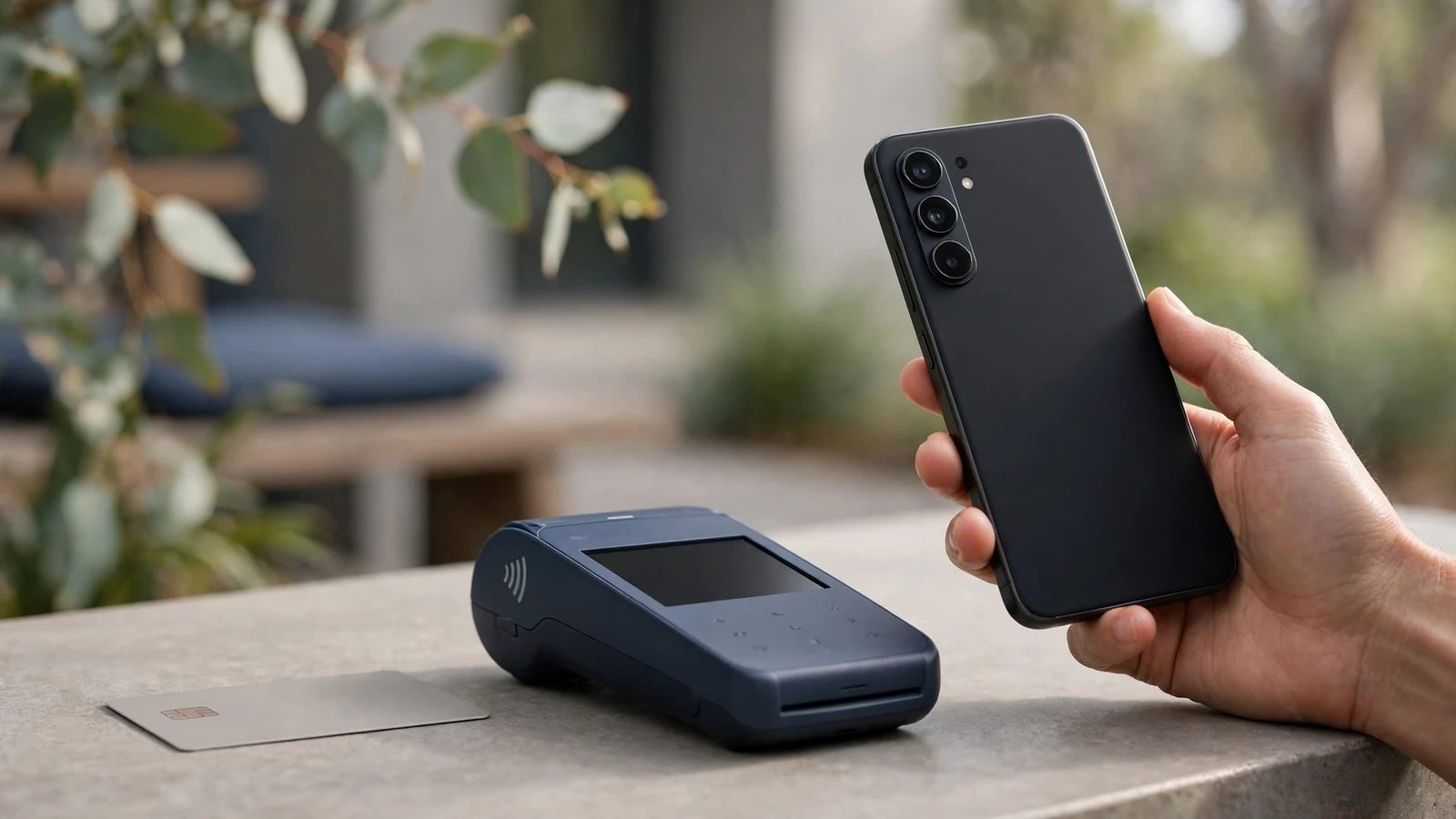
Table of Contents
- Paying from a Mobile: What the Verified Options Actually Do
- Deposits, References and Limits
- What “Pay by Phone” Means in the Australian Payment Context
- Bonuses: The Conditions That Change the Cash-Out
- No-Wagering and No-Deposit Offers: What Can Be Verified
- Phone-Bill Payments, BetStop and Other Unverified Claims
- Games, Withdrawals and the Limits of Payment Coverage
- Online Casino Claims and Payment Safety Checks
- Credit, Bank Transfers and the Cost of a Different Route
- Free Spins and Credit Offers: No Verified Examples to Price
Paying from a Mobile: What the Verified Options Actually Do
“Paying by phone” can describe two different actions. One is using a phone to access a payment service; the other is putting a purchase on a mobile account or phone bill. Those are not interchangeable. The deposit is not shown as a charge added to a phone bill.
PayID works through the New Payments Platform (NPP), which supports payments addressed using an identifier such as a mobile number or email address. The identifier is a way to direct a payment; it does not make the mobile provider the payer or turn the transaction into a bill charge. The device is the point of access, while the bank account is the source of funds.
The steps are straightforward in form: PayID is selected as the payment option, an amount is entered, and the payment is confirmed in the banking app. The app is where the bank-side transaction is authorised. That is materially different from entering a phone number to ask a carrier to add a casino deposit to a monthly bill or prepaid balance. A mobile number can serve as a PayID identifier, but its presence does not mean the payment is billed by a telecommunications provider.
This distinction matters for searches about online casino payments by phone, including requests for mobile pokies or other games charged to a phone bill. A phone can be used to access banking and confirm a PayID transfer, but that fact alone does not establish that a particular service accepts carrier billing. A payment method’s use on a mobile device and the source from which money is taken are separate questions.
There is also a legal boundary specific to Australia. Under the Interactive Gambling Act 2001, operators must not provide real-money online casino games, including pokies, poker and table games, to people physically located in Australia. That restriction concerns the service being provided, not merely the payment route. Describing a banking-app process therefore does not make real-money online casino play lawful or establish that an offshore operator may offer it to Australians.

PayID itself is a general payment service, not a casino product. Its role is to move money between accounts using an identifier, with the banking app serving as the interface for the payer. Whether a payment can be made to a particular recipient depends on the details presented in the payment flow; the method’s existence does not verify a recipient, an operator or the legality of an underlying service.
The practical wording can create confusion. “Mobile payment” may refer to a payment initiated on a phone, while “mobile bill payment” implies a charge collected through the phone account. PayID fits the first description. Treating those as the same route would misstate who processes the payment and where the funds come from.
Nor does access to a banking app demonstrate that a payment will be accepted by a casino or that a deposit will be credited. The app confirms a bank-side payment; the recipient’s process is separate. Claims about phone-bill billing, carrier participation or a particular operator’s acceptance require separate confirmation and should not be inferred from the word “mobile.”
The useful distinction is therefore narrow but important: a phone can be the device used to initiate a bank payment, and a mobile number can be used as a PayID identifier. Neither fact means the deposit is charged to the phone bill. For Australian residents, the separate legal restriction on operators providing real-money online casino games remains decisive regardless of whether a payment is initiated from a desktop or a phone.
Deposits, References and Limits
A PayID deposit has two separate constraints: the casino’s minimum amount and the transaction limit set by the bank. The first determines whether a payment can be accepted by the account; the second determines whether the bank will release it. Neither figure should be treated as universal across every casino or bank.
PayID casino deposits typically start at AUD 10–20, though some bank-transfer deposits may have a minimum of AUD 5.
PayID casino deposits commonly begin at AUD 10–20. Some payment pages may show a lower entry point, but the AUD 5 minimum applies to certain bank-transfer deposits, not as a general PayID minimum. The distinction matters when comparing a small deposit option with a bank’s own transfer rules: a casino’s stated minimum does not override the limit attached to the banking account.
For many major Australian banks, PayID transactions may be allowed in amounts from AUD 1,000 to AUD 5,000 per transaction, with daily limits ranging from AUD 10,000 to AUD 20,000. These are bank-set limits, not casino deposit allowances. The actual amount available can differ by bank and account settings, so the payment screen in the banking app is the operative check before confirmation. A casino may accept a deposit amount that the bank will not release in one transaction.
The practical amount is therefore the lower of the casino’s permitted deposit and the bank’s available PayID limit. If a deposit exceeds that limit, reducing the amount to fit is simpler than assuming that the casino’s payment page can change the bank’s controls. A bank may also apply limits at the daily level, so several smaller payments can still be affected by the same ceiling.

The reference is part of the deposit
The payment reference can determine whether the casino’s system matches the incoming transfer to the correct account. Some casinos require a player ID or username in that field for automatic crediting. If the reference is absent or incorrect, the money may arrive at the payment recipient without being attached automatically to the player’s casino balance.
That creates a processing problem rather than a failed transfer. The deposit may remain pending while support staff identify and allocate it manually. The reference should therefore be copied exactly as requested on the deposit page, with no extra text that could obscure the required identifier. A correct amount sent with the wrong reference is still a deposit that may need intervention.
A payment record should be retained until the balance is credited. It can help explain a pending transaction, but it does not replace the required reference or guarantee automatic allocation. The cleanest sequence is to confirm the recipient and payment details, enter the required player identifier in the reference field, then approve the transfer in the banking app.
- Copy the player ID or username exactly as requested
- Retain a payment record until the balance is credited
- Verify the recipient and payment details before approval
- Include extra text in the reference field
- Use an incorrect or absent payment reference
- Assume a payment record replaces the required reference
Reading the limits without confusing them
A minimum deposit is the smallest amount a casino will accept through a stated method. A bank transaction limit is the maximum the bank allows for a payment under its own rules. These figures work in opposite directions: the casino minimum sets a floor, while the bank limit sets a ceiling. A deposit falls within the usable range only when it satisfies both.
For example, a casino minimum within the common AUD 10–20 range does not mean every bank will permit a transfer of that amount in every circumstance; the account’s available settings still govern release. Conversely, a high bank limit does not oblige a casino to accept a large deposit. Its own payment terms remain separate.
When the amount is accepted by both sides and the reference is correct, the payment has the conditions needed for ordinary account matching. If it remains pending, the reference is one of the first details to check alongside the transaction record. The figures on the page describe boundaries, not a promise that every payment will be credited automatically.
What “Pay by Phone” Means in the Australian Payment Context
For pay-by-phone casino options in Australia in 2026, check the available payment methods and terms before choosing. This list offers a concise reference to the details provided for each operator.
License: Curacao eGaming OGL/2023/174/0082 (Dama N.V.) · Min. deposit: A$15 LevelUp Casino lists a Curacao eGaming licence, OGL/2023/174/0082, held by Dama N.V. Its stated minimum deposit is A$15.
License: Curacao Golden Pokies is listed with a Curacao licence. That is the available identifying detail provided here.
License: Curacao (operating since 2017) · Min. deposit: A$20 Uptown Pokies is listed as operating since 2017 under a Curacao licence. Its stated minimum deposit is A$20.
License: Tobique Gaming Commission · Payout speed: crypto ~10-15 minutes, fiat 1-5 days · Min. deposit: A$30 SkyCrown is listed with a Tobique Gaming Commission licence. Stated payout times are around 10–15 minutes for crypto and 1–5 days for fiat; the minimum deposit is A$30.
License: Curacao Gaming Control Board OGL/2023/176/0095 (Hollycorn N.V.) Rollero Casino is listed with Curacao Gaming Control Board licence OGL/2023/176/0095, held by Hollycorn N.V. The licence is the available detail to consider here.
License: Curacao · Min. deposit: A$20 (POLi) Lucky Dreams is listed with a Curacao licence and a A$20 minimum deposit for POLi. The stated deposit detail is specific to that payment method.
License: Curacao Gaming Control Board OGL/2023/174/0082 (Dama N.V.) SpinsUp is listed with Curacao Gaming Control Board licence OGL/2023/174/0082, held by Dama N.V. The licence is the available identifying detail provided here.
License: Curacao · Payout speed: crypto 30-60 minutes, fiat 1-5 days · Min. deposit: A$10 Wild Tokyo is listed with a Curacao licence and a A$10 minimum deposit. Stated payout times are 30–60 minutes for crypto and 1–5 days for fiat.
License: Curacao eGaming (Hollycorn N.V., since 2017) · Min. deposit: A$20-30 (depends on the offer) Playfina Casino is listed with a Curacao eGaming licence held by Hollycorn N.V. and has been operating since 2017; its stated minimum deposit is A$20–30, depending on the offer.
License: Curacao eGaming (Roby Games Ltd) Roby Casino is listed with a Curacao eGaming licence held by Roby Games Ltd. The licence is the available identifying detail provided here.
“Pay by phone” can describe two different things: paying through a phone, or adding a gambling payment to a mobile phone bill. PayID fits the first description. A deposit is initiated in a banking app and sent through the New Payments Platform (NPP); it is not, on that basis, a charge to a phone account.
The distinction matters because the device and the payment rail are separate. A mobile phone can be the screen used to access a bank account, while PayID carries the transfer between accounts. The identifier may be a mobile number or email address, but using a phone number as a PayID does not make the transaction a phone-bill payment.
PayID transactions settle in real time through the NPP. Once a transfer is released, the payment network can clear it within minutes; deposits at casinos have also been described as arriving within seconds, with a typical reported range of three to fifteen seconds. These timings refer to the transfer reaching the receiving end, not necessarily to every step that follows.
That difference is central to understanding casino pay-by-phone claims. Network settlement and casino account processing are distinct stages. A transfer can move quickly through the payment system, while the casino may still need to register or approve the deposit before the balance changes. A fast payment rail does not, by itself, establish that funds will be usable immediately.

The word “phone” can therefore obscure what is being paid with. With PayID, the banking app is the interface and the NPP is the transfer infrastructure. The payment comes from the linked bank account. It is not evidence that the amount has been billed by a telecommunications provider or added to a mobile plan.
For anyone comparing descriptions of pay-by-phone casinos in Australia, the useful question is what the payment flow actually does. If it opens a banking app and sends a PayID transfer, the payment is a bank-account transfer initiated on a phone. Calling it mobile payment is accurate in that limited sense; calling it a phone-bill deposit would describe a different arrangement.
Speed should be read with the same care. Real-time settlement describes how the NPP handles the transfer once it is released. A casino’s display of the deposit is a separate event, and elapsed time between those stages cannot be attributed automatically to the payment network. The transfer may be settled even while the casino account has not yet reflected it.
This is why “instant” can be an imprecise label. It may refer to the payment rail, the expected arrival of the deposit, or the point at which a casino makes funds available. Those are not interchangeable timestamps. For a PayID deposit, the grounded description is that the network settles in real time and the transfer can clear within minutes after release, while casino processing still applies.
Attention: A fast payment rail does not guarantee that funds will be usable immediately, as casino account processing is a separate stage from network settlement.
The practical meaning of the phrase is narrower than it first sounds: a phone can be used to initiate a PayID payment, but the phone itself is not the funding source. The relevant mechanism is a bank transfer through the NPP, followed by the casino’s own handling of the incoming payment. A short network delay does not remove that second stage, and a phone number used as an identifier does not turn PayID into billing through a mobile carrier.
Bonuses: The Conditions That Change the Cash-Out
A deposit bonus is not the same as withdrawable cash. Its value depends on the conditions attached to it and on what remains eligible for withdrawal after those conditions are applied. A promotion described as a phone-payment casino bonus does not, by its label, establish that a phone-bill charge is available or that the bonus can be cashed out freely.
The central term is the wagering requirement: the amount of eligible play required before a bonus-related balance can be withdrawn. The precise calculation depends on the offer’s wording. It may apply to the bonus, the deposit, or a combined balance. Those bases produce different obligations, so the headline amount alone cannot show the cost of accepting the offer.
Maximum-bet rules can affect whether play counts toward that requirement. If a promotion sets a ceiling on the stake, exceeding it may breach the terms or affect bonus eligibility. The size of the balance does not override the rule; a bet that appears small relative to the available funds can still be outside the permitted limit.

Game weighting changes the calculation again. A game may contribute fully, partly or not at all toward wagering. Where contribution is reduced, more eligible play may be needed to satisfy the same stated requirement. Where a game is excluded, playing it may add nothing to the required progress. A casino’s game catalogue or a search for pokies that accept a particular payment method does not establish how those games count under a bonus.
Deadlines turn wagering into a time-bound condition. If the required activity is not completed before the stated expiry, the bonus or associated winnings may be removed under the terms. The relevant deadline is the one in the offer rules, not an assumption based on how quickly a deposit arrives. Payment settlement and bonus eligibility are separate questions.
A maximum cash-out clause can place a ceiling on the amount withdrawn from bonus play, even after wagering is complete. That cap can make a large promotional balance worth less than its displayed figure suggests. The calculation therefore needs to include both the route to qualifying and the amount that can ultimately leave the account.
Before accepting any bonus, the material terms to compare are the wagering basis, eligible games and their weighting, maximum permitted bet, completion deadline and cash-out cap. The conditions should be read together: a low wagering threshold does not settle the value if the games contribute little, the deadline is restrictive, or the withdrawal cap is low. Conversely, a prominent bonus figure cannot compensate for terms that prevent the balance from becoming withdrawable.
Bonus Evaluation
- Wagering requirements determine the amount of play needed before withdrawal
- Game weighting can reduce the contribution of certain games toward requirements
- Maximum-bet rules and deadlines can affect bonus eligibility
- Cash-out caps may limit the final amount withdrawable from bonus play
Payment labels do not answer these questions. A casino promotion associated with PayID, or a claim about paying from a mobile device, says nothing by itself about wagering, game contribution or cash-out limits. Nor does a payment option verify that a particular operator or offer is lawful for people in Australia. Real-money online casino games offered to people physically located in Australia are prohibited under the Interactive Gambling Act 2001. In that context, bonus arithmetic is a way to assess the stated terms, not a recommendation to take up an offer.
No-Wagering and No-Deposit Offers: What Can Be Verified
A “no-wagering” label describes a claimed bonus condition, not the amount that can be withdrawn. A “no-deposit” label describes a claimed entry condition, not proof that a promotion is active or that its proceeds can be cashed out. Neither phrase establishes the offer’s terms on its own.
The distinction matters because the labels can leave the decisive conditions unstated. A promotion described as requiring no wagering could still carry other restrictions on eligibility or withdrawal. “No deposit” does not, by itself, say whether winnings are withdrawable, what account conditions apply, or whether a payment method is relevant. Without the actual terms, there is no defensible cash-out figure to calculate.
Adding “pay by phone” does not resolve that uncertainty. It can describe a payment idea or a promotional label, but it does not establish that a phone-bill charge is available, that a deposit is required, or that any particular bonus is attached to a payment route. The wording is not a substitute for the promotion’s stated conditions.

Naming an operator or quoting a cash value without dependable terms would turn an unpriced claim into apparent advice.
There is also a market constraint that changes how these offers should be read. Under Australia’s Interactive Gambling Act 2001, it is illegal for operators to provide real-money online casino games, including pokies, to people physically located in Australia. A bonus description does not change that status. Nor does a payment label make an online casino promotion lawful to provide to Australians.
The practical conclusion is narrow: a search result or headline using “no wagering”, “no deposit” or “pay by phone” cannot establish a cashable promotion. Until the conditions and the legal position are clear, the advertised label has no reliable monetary value.
Phone-Bill Payments, BetStop and Other Unverified Claims
A phone-bill payment and a payment made on a phone are different things. A bill payment would place a charge on a mobile account or prepaid balance. PayID, by contrast, is initiated in a banking app and transfers money through the New Payments Platform. Using a phone to approve a bank payment does not turn it into carrier billing.
That distinction matters when a casino page describes a deposit as “pay by phone”. The phrase alone does not identify the payment route. It could refer to mobile access to a banking service, or it could suggest that the amount will appear on a phone bill. Those are not interchangeable arrangements, and a label is not proof that a carrier will process a gambling charge.
Legal Restriction
Under the Interactive Gambling Act 2001, providing real-money online casino games to people physically located in Australia is illegal.
Searches for phone-bill payments may also combine the method with claims about BetStop. A statement that a casino is “not on BetStop” does not establish that phone-bill payments are available, nor does it explain how a payment would be processed. BetStop status and the mechanics of a payment are separate questions; one cannot be inferred from the other.
Likewise, “not Boku” is not a description of an alternative payment route. It only rules out, or appears to rule out, a named service. Without a clearly identified provider and a disclosed billing process, the wording leaves basic questions unanswered: whether a mobile carrier is involved, where the charge appears, and what entity receives the payment. A different brand name would not, by itself, verify those details.
The same caution applies when phone-bill wording is paired with “real money”, bingo, pokies or a no-deposit offer. A payment description cannot establish that a game or promotion exists, or that a deposit is not required. Those are separate claims and require their own terms. A no-deposit phrase should not be read as evidence of a phone-bill facility.
There is also a legal limit that changes how these claims should be read in Australia. Under the Interactive Gambling Act 2001, providing real-money online casino games to people physically located in Australia is illegal for operators. That prohibition covers casino-style games such as slots, poker and table games. A payment label does not alter the status of the service being offered.

Accordingly, “pay by phone”, “not on BetStop” and “not Boku” should not be treated as proof of a working billing route or of lawful access to online casino games in Australia. The wording may sound specific, but unless the payment mechanism and service are clearly identified, it does not settle either question.
Games, Withdrawals and the Limits of Payment Coverage
A payment option describes how a transaction may be made; it does not establish which games or promotions a site provides. A phone-based payment search can therefore blur two separate questions: whether a payment route exists and whether a particular game or bonus is available. Neither answer follows from the other.
That distinction matters in Australia. Under the Interactive Gambling Act 2001, operators cannot provide real-money online casino games to people located in the country. This includes pokies and table games such as blackjack and roulette. A payment method appearing on a page does not change that legal position, nor does it verify a catalogue of games or a casino bonus.
POLi should be understood chiefly as a way to make deposits, not as evidence that the same route can return funds. Its availability does not establish a withdrawal option. The method used to pay in and the method available for a payout are separate parts of the payment arrangement.
POLi is primarily a deposit method; its availability does not guarantee that the same route can be used for withdrawals.
Visa and Mastercard are widely accepted for deposits, but a card deposit does not guarantee a card withdrawal. A specialist review describes card payouts as potentially slower or unavailable, depending on the processor. That qualification is material: acceptance at the deposit stage says nothing conclusive about the route for cashing out.
A specialist review also notes that an operator may require a withdrawal to use the deposit method where that is possible. This is conditional, not a universal rule. If the original route cannot handle a payout, the operator’s stated alternatives and account requirements determine what happens next. The payment logo alone cannot settle that question.
The same limits apply when searching for phone-accessible pokies or bonuses. A mobile payment route cannot verify game availability, bonus eligibility or withdrawal terms. Those are distinct conditions, and none should be inferred from the name of a payment method. In Australia, the legal status of real-money online casino games remains the governing constraint, regardless of the device or payment route involved.
Online Casino Claims and Payment Safety Checks
A payment screen is not proof that an online casino service is lawful or that a deposit will be credited correctly. Under the Interactive Gambling Act 2001, operators must not provide real-money online casino games to people physically located in Australia. A page describing phone-based deposits does not change that legal position.
For a PayID payment, the recipient name is a key check before confirmation. It should match the recipient details presented through the payment process. If the displayed name is unexpected or inconsistent, the transfer should not proceed until the discrepancy is resolved. A familiar payment label or casino logo is not a substitute for checking where the money is going.
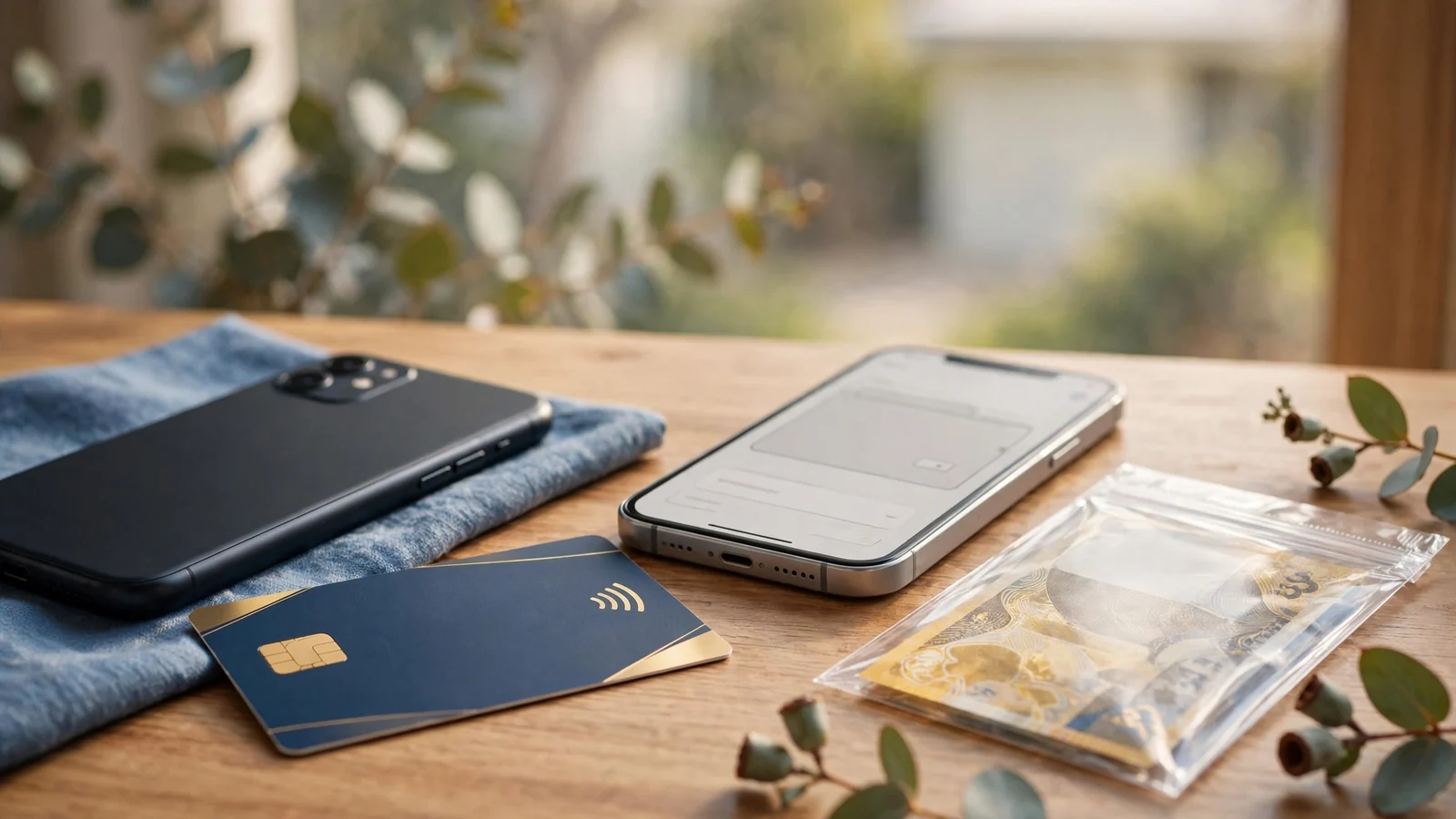
The payment reference matters as well. Some operators require a player ID or username there so the deposit can be matched to an account automatically. If that identifier is omitted or entered incorrectly, the funds may remain pending and need manual processing by support. This creates a preventable delay: the transfer can leave the bank while the casino account still shows no corresponding credit.
A unique reference should be used where required, and the characters should be checked before the transfer is authorised. Reusing or mistyping a reference can make it harder to identify which account a payment belongs to. The recipient name and reference serve different purposes: one helps confirm the destination, the other helps associate the payment with the intended account.
Claims about mobile deposits should be read narrowly. Using a banking app on a phone is not the same as charging a deposit to a mobile phone bill, and neither wording establishes that a particular service is available to people in Australia. The payment details alone also do not establish an operator’s legal status or guarantee how quickly a deposit will be credited.
Where a payment has been sent but not reflected in an account, the relevant issue may be the reference or the operator’s matching process. A record of the transaction and the exact reference can help support trace the payment. It cannot make an unlawful service lawful, or turn a mismatched payment into an automatically credited deposit.
Payment Safety Check
- Match the recipient name with the provided payment details
- Check that the unique player ID or username is in the reference field
- Verify all characters in the reference before authorising the transfer
- Confirm the transaction record is saved for potential support traces
Credit, Bank Transfers and the Cost of a Different Route
A request to pay by phone can refer to different things: using a mobile device to arrange a bank payment, charging a purchase to a phone account, or using a credit card. Those are not interchangeable. In Australia, credit-card payments must not be accepted for online gambling services, and the Interactive Gambling Act 2001 prohibits operators from providing real-money online casino games to people in the country. A reference to credit in a payment description does not make a card deposit an available route.
A bank wire is a separate payment process. To arrange one, the payer needs the casino business name, its bank account number and bank name. The bank may also request SWIFT, BIC or IBAN details. The transfer can be arranged at a bank, by phone or online, but the payment path is not necessarily quick: a wire may take as long as seven business days to appear in the account.
Cost is another variable. Bank-wire charges may exceed those attached to other non-banking payment methods. The relevant comparison is therefore not just whether a transfer can be sent, but the amount received after fees and any currency conversion. Using the same currency for the bank account and the casino account may avoid foreign-exchange fees; where currencies differ, the conversion cost can reduce the amount credited.
A wire also requires more recipient information than a simple card transaction. Any bank details should match the payment instructions exactly, since an error can obstruct or delay processing. The time taken for the bank transfer to arrive is distinct from any subsequent account processing.

The arithmetic is straightforward: a payment route with additional bank charges and a longer arrival window has a higher cost in both money and access time. A credit-card label does not alter those mechanics, and a phone-based method should not be assumed to mean a charge added to a mobile bill. In Australia, the legal restriction on online casino services remains the controlling issue, regardless of the payment channel described.
Free Spins and Credit Offers: No Verified Examples to Price
Free spins and casino credit are promotional terms, not payment methods. A payment route does not establish that a particular promotion is available, what it covers or whether its value can be withdrawn. The distinction matters: a deposit made through a banking app does not, by itself, qualify an account for spins or credit.
Without stated eligibility rules, the advertised value has no reliable cash equivalent. Spins may be restricted to particular games, while credit may carry conditions that affect whether any resulting balance can be withdrawn. A displayed amount is therefore not the same as money available to cash out.
The same applies to promotions described alongside phone-based deposits. Mobile access to a banking app says how a payment is initiated; it does not define a bonus, its qualifying deposit or its withdrawal terms. Treating those as one offer bundles two separate sets of conditions and obscures the actual value.
For a meaningful price comparison, the promotion would need to specify its eligibility, applicable games, wagering terms, maximum bet, expiry and any cap on cash-out. Without those details, assigning a dollar value would be guesswork. A promotion with no clear route from the stated benefit to withdrawable funds has no calculable net value.
There is also a more basic limit in Australia: real-money online casino games, including pokies, are prohibited services when offered to people physically in the country. Free spins or account credit do not change the nature of the underlying service. Nor does a payment label make an offshore casino offer lawful to provide to Australian customers.
Do Australian online casinos support PayID withdrawals?
PayID can be used for casino withdrawals, but operators must not provide real-money online casino games to people in Australia. PayID’s availability does not make that service lawful.
What are the minimum and maximum deposit limits at PayID casinos?
PayID casino deposits commonly start at AUD 10–20. The maximum depends on both the casino’s deposit allowance and your bank’s PayID limit; major Australian banks commonly allow AUD 1,000–5,000 per transaction, with daily limits of AUD 10,000–20,000.
Can you withdraw casino winnings using PayID?
Yes, PayID withdrawals are offered by some casinos. They commonly start at AUD 20–50, with maximums of AUD 5,000–10,000 per transaction.
How long do withdrawals take?
After approval, PayID withdrawals may arrive within minutes to hours. Casino review time is often the main bottleneck; verified accounts at top-rated PayID casinos are typically reviewed within 2–6 hours.
What is the minimum PayID deposit?
PayID casino deposits commonly start at AUD 10–20. The minimum is set by the casino’s payment page.
How long do PayID deposits take?
PayID deposits usually arrive within seconds, typically 3–15 seconds. A missing or incorrect payment reference can leave a deposit pending while it is matched manually.
Created by the ”Space9 Casino” editorial team.