New PayID Pokies in Australia: Payments Explained
 Available in AU
PayID uses a registered phone number or email to route bank transfers through the NPP, while bank policies and terms affect access and payouts.

Table of Contents
- How PayID Moves Money Between Australian Banks
- Deposits, Transfers and the Conditions That Matter
- Australian PayID Access: Bank Policies and Availability
- Withdrawal Timing: Approval Is Not the Same as Arrival
- Assessing PayID Terms Without a Promised Ranking
- Real-Money Stakes, Minimums and Bonus Conditions
How PayID Moves Money Between Australian Banks
PayID is an Australian digital payment system that lets a person send money using a registered identifier, such as a mobile phone number or email address. It operates through the New Payments Platform (NPP), which connects participating banks for quick transfers. The identifier is the address used for the payment; PayID is the system that enables the transfer.
That distinction matters when a payment option is described as “PayID”. It does not mean that a phone or email account holds the money, nor does it describe a separate wallet. The payment is a bank transfer routed through the NPP. PayID provides an alternative way to identify where the funds should go, without making the identifier itself a bank account.
The practical point is speed between banks. PayID is designed for instant transactions, and the NPP facilitates quick movement of funds from one bank to another. The payment method therefore changes how the destination is identified, while the underlying movement remains a transfer between bank accounts. It is not a separate balance that sits outside the banking system.
Choosing a PayID pokies site involves more than the payment label: it is worth checking the available operator details before deciding where to play. These short verdicts highlight only the information provided for each option.
License: Curacao eGaming OGL/2023/174/0082 (Dama N.V.) · Min. deposit: A$15 LevelUp Casino lists a Curacao eGaming licence held by Dama N.V. Its stated minimum deposit is A$15.
License: Curacao Golden Pokies is listed as operating under a Curacao licence.
License: Curacao (operating since 2017) · Min. deposit: A$20 Uptown Pokies is listed as operating under a Curacao licence and has been operating since 2017. Its stated minimum deposit is A$20.
License: Tobique Gaming Commission · Payout speed: crypto ~10-15 minutes, fiat 1-5 days · Min. deposit: A$30 SkyCrown lists a Tobique Gaming Commission licence. Its stated payout times are around 10–15 minutes for crypto and 1–5 days for fiat, with a minimum deposit of A$30.
License: Curacao Gaming Control Board OGL/2023/176/0095 (Hollycorn N.V.) Rollero Casino lists a Curacao Gaming Control Board licence, OGL/2023/176/0095, held by Hollycorn N.V.
License: Curacao · Min. deposit: A$20 (POLi) Lucky Dreams is listed as operating under a Curacao licence. Its stated minimum deposit is A$20 for POLi.
License: Curacao Gaming Control Board OGL/2023/174/0082 (Dama N.V.) SpinsUp lists a Curacao Gaming Control Board licence, OGL/2023/174/0082, held by Dama N.V.
License: Curacao · Payout speed: crypto 30-60 minutes, fiat 1-5 days · Min. deposit: A$10 Wild Tokyo is listed as operating under a Curacao licence. Its stated payout times are 30–60 minutes for crypto and 1–5 days for fiat, with a minimum deposit of A$10.
License: Curacao eGaming (Hollycorn N.V., since 2017) · Min. deposit: A$20-30 (depends on the offer) Playfina Casino lists a Curacao eGaming licence held by Hollycorn N.V. and has been operating since 2017; its minimum deposit is A$20–30, depending on the offer.
License: Curacao eGaming (Roby Games Ltd) Roby Casino lists a Curacao eGaming licence held by Roby Games Ltd.
A mobile number or email address can be easier to recognise than a string of banking details. That convenience is about the identifier, not about the payment being risk-free or reversible. PayID transactions are irreversible once confirmed. A transfer that has been confirmed should therefore be treated as final rather than as a payment that can simply be cancelled later.
“Instant” describes the payment system’s capability; it does not settle every question about a payment involving a separate service. A bank transfer can move quickly once it is made, while another organisation may have its own steps before it accepts or credits the funds. The speed of the rail and the handling at either end are different matters. A fast transfer mechanism is not, by itself, a promise about every stage of a transaction.
This distinction is relevant to searches for new PayID options associated with pokies. At some online casinos, PayID deposits are typically completed within seconds. That describes the reported deposit step, not the suitability or legality of the service offering it, and not a guarantee that every attempted payment will be accepted. A payment method cannot establish that an operator is authorised, that its games are fair, or that winnings will be paid.
The legal setting in Australia is especially important to that distinction. Under the Interactive Gambling Act 2001, it is illegal for operators to provide real-money online casino games, including slots, to people physically located in Australia. A payment method’s presence on a website does not alter that rule. Nor does a transfer’s speed make a prohibited service lawful. PayID is a banking payment system, not a gambling licence or an endorsement.

The NPP connection explains why PayID can support quick transfers across banks. It also explains why the identifier should not be confused with the payment’s destination: the phone number or email address serves as a unique reference for the transfer, while the banks and payment platform handle the movement of money. In short, PayID makes bank-to-bank payments addressable through an identifier people may find easier to use.
For Australian payment terminology, “PayID pokies” refers to a payment method being associated with a gambling service, not to a separate kind of PayID account. The underlying mechanism remains the same whether the transfer is made for an ordinary payment or is presented by a service as a deposit method. Context changes the purpose of the payment; it does not change what PayID is.
The useful limit of the speed claim is therefore clear. PayID can move funds quickly between banks through the NPP, and deposits described by online casinos as PayID deposits are typically credited within seconds. Those statements concern payment processing, not legal status or the conduct of the recipient. A quick payment is still a confirmed bank transfer, and confirmation is the point at which it becomes irreversible.
Deposits, Transfers and the Conditions That Matter
PayID can be used to move funds in either direction: into an account balance as a deposit, or out of it as a withdrawal. The transfer method is only one part of the transaction. The details attached to the payment, the account receiving it and the terms applied by the service all affect whether the movement can be completed as intended.
Legal Warning
Under the Interactive Gambling Act 2001, it is illegal for operators to provide real-money online casino games, including pokies, to people physically located in Australia.
For people physically located in Australia, this is a description of payment mechanics, not an invitation to use an online casino. Under the Interactive Gambling Act 2001, operators cannot lawfully provide real-money online casino games, including pokies, to customers in Australia. The appearance of PayID as a payment option does not make a service lawful, establish that it is licensed, or demonstrate that winnings will be paid.
Match the payment identity to the account
The PayID used for a transaction must be registered with the player’s bank. If the payment details entered do not correspond to that bank registration, the transaction may not be accepted or correctly attributed. A payment reference or account detail is not a substitute for matching the underlying identity.
The bank account holder’s name should also match the name on the casino profile. A mismatch can create problems when a payment is reviewed or a withdrawal is requested. Using another person’s bank account, or registering a casino profile under a different name, leaves the payment trail inconsistent. That can delay resolution and may lead to a declined transaction or a withdrawal not being processed as expected.
This matching requirement is separate from whether PayID itself is available. A correctly registered identifier does not override the service’s account rules, and a listed payment method does not confirm that a particular transaction will be accepted. The transaction depends on the details being consistent across the bank and the receiving account.
Deposits and the amount entered
PayID deposits are commonly described as fast, with funds moving quickly between accounts. That describes the payment transfer, not any separate step required to credit an account. The amount entered still has to fall within the receiving service’s stated deposit conditions, and the payment needs to be linked to the correct account.

A specialist review of PayID casino payment terms reports that many operators set deposit minimums in the AU$10–AU$20 range. This is a reported range, not a universal rule: the amount depends on the individual service and can change. A minimum is also not a recommendation about how much to deposit. It is simply a threshold that may determine whether a transaction is accepted.
PayID itself does not impose a transfer fee. Reputable venues also do not add a separate fee for PayID deposits or withdrawals. That does not establish that every service is fee-free: any charge stated in the service’s own terms is a separate condition and should be distinguished from a fee charged by PayID. A payment method’s lack of a transfer charge says nothing about the legality or reliability of the service receiving the money.
Limits and final confirmation
A specialist payment review reports that the player’s bank sets the daily PayID transfer limit. The applicable ceiling therefore depends on the bank account and its current settings, rather than on a single limit that can be assumed across Australian banks. A transaction can be rejected if it exceeds the available limit, even when the details are correct and the receiving service accepts PayID.
The transfer also has an important finality condition: once confirmed, a PayID payment is irreversible. The payment should therefore be checked before confirmation, including the recipient information and amount. A mistaken transfer is not equivalent to an unsubmitted payment that can simply be cancelled. The speed of the system makes accurate confirmation more important, not less.
- Match the PayID to your registered bank identity
- Ensure the bank account name aligns with the casino profile
- Verify the amount meets deposit terms and bank limits
- Use another person’s bank account for transactions
- Register a casino profile under a different name
- Assume a payment can be cancelled after confirmation
For a deposit, the relevant checks are whether the payment details match the bank registration, whether the account names align, and whether the amount meets the stated terms without exceeding the bank’s limit. For a withdrawal, the receiving PayID needs to be associated with the same verified account identity. A successful transfer does not resolve a mismatch in profile details; it can instead expose one.
A PayID option is a payment route, not a guarantee of acceptance, account credit, or access to funds. Nor does it verify an operator’s licence, fairness or willingness to pay. In Australia, those distinctions matter because real-money online casino services are prohibited for operators to provide to people in the country. A payment can be technically valid while the underlying service remains unlawful.
Australian PayID Access: Bank Policies and Availability
PayID access is not determined by the payment method alone. A transfer can depend on whether the bank permits it, whether the destination is recognised as a gambling merchant and whether the service offering the transaction is legally available in Australia. The presence of PayID in a payment menu establishes none of those points by itself.
A specialist review has reported that some Australian banks, including banks among the Big Four, may occasionally block PayID transfers to gambling merchants they recognise. This is a qualified report, not evidence that every bank applies a blanket restriction or that the same policy is applied in every case. Bank policies can change, and a restriction described in one review should not be treated as a permanent statement about all customers or all transfers.
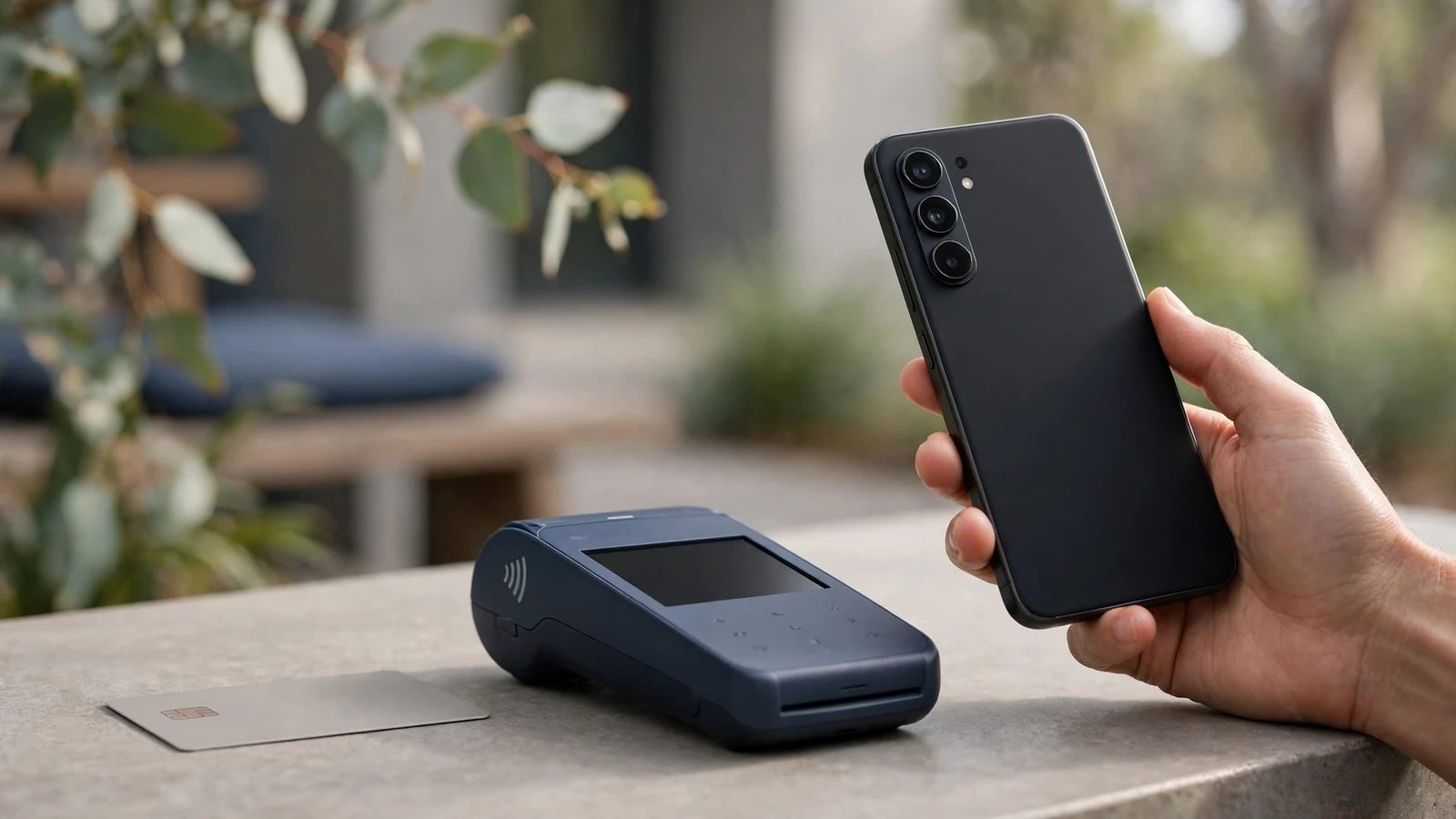
The practical distinction is between a payment option being displayed and a bank authorising a particular payment. A website can list PayID while a bank declines a transfer to a destination it identifies as connected with gambling. Conversely, a transfer being available through a bank does not establish that the recipient is authorised to provide the underlying service in Australia. Payment access is a banking decision; legality is a separate question.
That separation matters because the Interactive Gambling Act 2001 prohibits operators from providing real-money online casino games, including pokies, to people physically located in Australia. A PayID label does not alter that position. Nor does the ability to send funds indicate that a service is licensed locally, that its games meet any particular standard, or that it will pay out winnings. A payment rail can process a transaction without validating the activity associated with it.
Bank controls may also be framed through acceptable use policies. Such policies can affect whether a payment to a recognised merchant is permitted, but the fact that a bank has an acceptable use policy does not show that every transaction in a category will be blocked. Recognition of a merchant, the bank’s current controls and the circumstances of a transaction may all matter. The available report supports only the narrower conclusion that blocks can occur; it does not support a universal claim about Australian PayID access.
For that reason, a PayID option shown before account creation is not proof of dependable access. A payment page may present a method without showing how a particular bank will treat the destination. Even where a bank permits one transfer, that experience does not guarantee that a later one will be handled the same way. Access should therefore be understood as conditional, not as a standing feature of every service that advertises PayID.
Bank Restrictions
Some Australian banks, including those among the Big Four, may occasionally block PayID transfers to recognised gambling merchants based on their internal policies.
A bank refusal should not be treated as a technical obstacle to work around. It is a decision under the bank’s own controls, and using another route to evade it would not make an otherwise prohibited service lawful. The distinction is especially important where promotional material presents PayID as evidence of safety or legitimacy. It is neither. The method identifies a way to initiate a payment; it does not certify the recipient.
The same caution applies to claims that PayID is “available” across Australia. That wording can describe a payment method in general while saying little about whether a particular transfer to a particular merchant will be accepted. It can also blur the difference between ordinary bank-to-bank use and a payment linked to a gambling service. Those are not interchangeable statements.
The relevant assessment is therefore limited: some banks may block transfers to recognised gambling merchants, but the reported position is occasional rather than a confirmed market-wide rule. PayID appearing on a page cannot establish that a transfer will proceed, and a successful transfer cannot establish that the service receiving it is lawful in Australia. The payment option answers only one narrow question—whether a route is presented—not whether the bank will allow it or whether the underlying service may legally be provided.
Withdrawal Timing: Approval Is Not the Same as Arrival
A PayID withdrawal has two separate stages: the casino’s handling of the request and the transfer from the casino to the bank account. The distinction matters because the payment network cannot start moving funds while the casino still has the request under review or marked as pending. A quick transfer after release does not remove time spent waiting for release.

Australian law prohibits operators from providing real-money online casino games to people physically located in Australia. Timing descriptions for PayID pokies therefore do not establish that a service is lawful, available, or suitable for use in Australia. They are descriptions of reported payment processes, not assurances about an operator.
A specialist gambling review reports that a casino may keep a withdrawal pending for 24–72 hours before funds leave its system. That interval belongs to the operator’s process, not to PayID’s transfer mechanism. During it, the request may not yet have been approved or sent. A status such as “pending” should therefore not be read as evidence that a bank transfer is already underway.
Once a withdrawal is approved and released, the remaining stage is the transfer to the nominated account. A specialist payment review reports a 12–24-hour period for PayID withdrawals after approval, and says the transfer may reach the account on the same day after the casino has approved it. These are reported timeframes, not a deadline that applies to every request. The important boundary is the approval timestamp: time before approval and time after approval describe different processes.
That separation explains how a payment can be described as fast while a withdrawal still takes several days from request to receipt. A specialist review gives a total of 2–4 days as a typical request-to-receipt range when the operator’s pending period is included. The total is not a single PayID processing time. It combines an operator-controlled wait with the later transfer period, and the first part can account for much of the delay.
Withdrawal Timeline
The casino reviews the request and performs KYC checks, which may take 24–72 hours.
The casino approves the request and releases the funds from its system.
The funds move via PayID to the bank account, typically taking 12–24 hours after approval.
The difference is practical when checking a withdrawal status. If the request remains pending, the relevant question is whether the casino has completed its review and released the funds. If it is approved but not yet received, the request has moved to the transfer stage. Treating both states as “PayID is slow” obscures which party or process still has an action outstanding.
Internal review is also connected to KYC, meaning the operator’s identity-verification checks. A specialist review reports that payout speed depends on both the casino’s review and the player’s KYC status. If verification is incomplete or further checks are required, approval may take longer; the transfer interval cannot be counted as though the money had already been sent. Approval and verification are therefore not incidental labels. They determine when the banking stage can begin.
For a clear timeline, the relevant record is the sequence of request, review, approval, release and receipt. A request date alone does not show when the casino authorised the payment. An approval notice is more informative, but it still does not prove that the receiving bank account has been credited. The final point is confirmation of receipt, not merely a changed status on the casino account.

Reported timing ranges should be treated as estimates rather than service guarantees. A specialist review describes a 24–72-hour pending period, while another reports 12–24 hours after approval and a total of 2–4 days from request to receipt. Those figures cannot be added mechanically to promise an exact arrival time: the descriptions may reflect different operator procedures, and the timing of an individual request depends on its review and verification status. If an operator publishes its own withdrawal policy, that policy governs its stated procedure; it does not turn a network estimate into a guaranteed payment date.
The accounting distinction is simple: the casino controls when it approves and releases a withdrawal; PayID concerns the transfer once released. The first clock may run before the second begins. A fast payment route can shorten the banking leg, but it cannot certify the casino’s review, determine when that review ends, or guarantee the date funds arrive.
Assessing PayID Terms Without a Promised Ranking
A PayID label is not a measure of an offer’s value. The relevant calculation is what leaves the account, what reaches it after a withdrawal, and which conditions apply to that transfer. A payment method can have no fee of its own while a casino applies a separate charge. Those are different costs and should not be folded into one “free” claim.
PayID does not impose a transfer fee. Reputable venues also do not add a charge for PayID deposits or withdrawals. However, a casino’s own withdrawal terms may include deductions or transaction fees, so the payment network’s pricing alone cannot establish the final amount received. The cashier and the withdrawal terms are the places where those operator-specific conditions need to be stated.
Attention: While PayID itself does not impose transfer fees, individual casinos may apply their own withdrawal charges or threshold-based deductions.
Compare the amount received
A specialist review reports that some operators deduct A$5–A$10 from withdrawals below internal thresholds, with A$100 or A$200 given as threshold examples. This is a report of possible terms, not a dependable rule across operators. The deduction changes the net payout: a withdrawal subject to a fixed charge leaves less than the requested amount, and a threshold can make the same charge apply only to certain withdrawals. The exact wording matters more than the label attached to the payment option.
A separate specialist review reports that some casinos charge A$2–A$5 for a withdrawal. That figure should likewise be treated as an operator-specific possibility, not as a standard PayID charge. The distinction is financially material: a casino fee is not a fee charged by PayID. If both a threshold deduction and a withdrawal charge are listed, the terms need to be checked to establish whether they can apply to the same transaction. No assumed calculation can replace the operator’s written conditions.
A useful comparison therefore records the requested withdrawal, any fixed charge, any threshold-based deduction, and the amount that would remain after those deductions. If the terms do not explain when a charge applies, the final amount cannot be calculated confidently. An unclear fee is not a zero fee; it is an unresolved condition.
Treat minimums as separate terms
A specialist review places PayID minimums at some reputable online pokies sites between A$10 and A$30. This is a reported range, not a guarantee that a particular cashier will use those limits or that the range is current for every operator. The deposit minimum and withdrawal minimum are also separate figures. A low entry amount says nothing by itself about the minimum amount that can later be withdrawn or the deductions that could apply.

For a meaningful comparison, the cashier page should confirm that PayID is actually listed, and the operator’s terms should identify its deposit and withdrawal minimums. A payment option appearing in a general description is not sufficient confirmation of availability at the point of transaction. Nor does PayID availability demonstrate that an operator is licensed, that game returns are transparent, or that winnings will be paid.
Account identity is another condition with a direct financial consequence. The bank account name should match the casino profile name, and the PayID details should correspond to the details registered with the bank. A mismatch can interfere with a withdrawal. PayID transfers also cannot be reversed once confirmed, so the amount and destination need to be correct before confirmation.
Verify the legal and operator conditions
There is no responsible basis for presenting a “best” PayID pokies ranking for people in Australia. Under the Interactive Gambling Act 2001, providing real-money online casino games, including pokies, to people physically located in Australia is illegal for operators. A payment method does not alter that position. Nor does a payment option establish that an operator has a publicly verifiable licence. Any operator’s claimed licence would need independent verification; PayID alone is not evidence of one.
The practical assessment is therefore limited to the terms that can be checked: whether the cashier lists PayID, what minimums apply, whether the operator states a withdrawal fee or threshold deduction, and whether account details must match. Those conditions can be compared without turning payment access into an endorsement. If a fee is absent from the written terms, its absence should not be inferred from the word “PayID”; if a fee is stated, it belongs in the net-payout calculation.
Final Assessment
- PayID is a banking identifier system, not a gambling licence or legal endorsement
- Successful transfers depend on matching account identities and bank limits
- Withdrawal timing is split between operator review and banking transfer speed
- Bonus funds are subject to wagering requirements and maximum-bet rules
- Real-money online casinos remain illegal for those located in Australia
Real-Money Stakes, Minimums and Bonus Conditions
A payment method does not change the legal status of the service receiving the payment. Under Australia’s Interactive Gambling Act 2001, providing real-money online casino games, including pokies, to people physically located in Australia is illegal. PayID appearing in a payment description or cashier does not establish that an operator is authorised, make the service lawful, or confirm that winnings will be paid. The financial terms below describe conditions reported in discussions of offshore casino offers; they are not a recommendation to use such services.
A withdrawal minimum determines the smallest balance that can be requested as a payout. A specialist review of casino payment terms reported PayID withdrawal minimums in the AUD 20–50 range. That range is indicative, not a rule applying to every operator or account. The operative condition is the one written in the relevant withdrawal terms: it may set a threshold for each request, and a balance below that threshold may not qualify for withdrawal at that time.
The threshold affects the amount of money that remains unavailable for withdrawal. If a balance has not reached the stated minimum, the difference is not a fee by itself; it is simply part of the balance that cannot yet be requested under that condition. Whether the minimum applies to all withdrawals or only particular payment methods must be determined from the wording of the terms. A displayed PayID option does not answer that question.
The amount shown as available is also not necessarily the amount that can be withdrawn immediately. Bonus conditions can restrict access to funds until specified play requirements have been completed. A specialist review reported wagering requirements commonly expressed as 30x–45x the bonus amount. The multiplier is applied to the bonus amount in the stated calculation; it is not the same as a requirement to deposit that amount, and it should not be confused with a cash withdrawal minimum.

The wording around a bonus matters as much as the headline amount. Terms may specify which games contribute to wagering, whether the bonus or deposit is used as the calculation base, how long the requirement remains active, and which play limits apply. Those details determine the amount of qualifying play needed before a withdrawal request can proceed. Without the full terms, a bonus figure alone cannot show the eventual value of the offer.
A maximum-bet condition is a separate constraint during bonus wagering. Exceeding the permitted maximum bet can void the bonus and associated winnings. That can change a balance that appears withdrawable into one that is disputed or removed under the terms. The maximum and the consequences should therefore be read as part of the bonus conditions, not treated as minor promotional wording.
Account identity and account conduct can also affect access to a payout. The bank account name should match the casino profile name; a mismatch can lead to withdrawal failure. Creating multiple accounts at the same casino may result in account bans or forfeiture of winnings. These are distinct risks from the wagering calculation: meeting a play requirement does not resolve an identity mismatch or override an account restriction.

A useful comparison is therefore based on the final conditions, not the promotional headline: the withdrawal threshold, the wagering calculation, the eligible games, the maximum-bet rule, and any account restrictions. A low stated minimum does not make a bonus worthwhile if its conditions prevent the balance from becoming eligible for withdrawal. Conversely, a bonus with a large headline amount cannot be assessed without knowing the amount used as the wagering base and the applicable limits.
For any service operating outside Australia, these calculations remain secondary to the legal position. The Interactive Gambling Act 2001 prohibits operators from providing real-money online casino games to people in Australia. Payment access, including PayID, does not alter that prohibition or serve as evidence of local authorisation. The figures reported in specialist reviews describe terms that may be encountered, not a dependable promise of access to funds or a reason to treat an offshore casino offer as suitable for Australian residents.
What is the minimum PayID deposit?
Typical minimums are A$10–A$20, although some operators accept deposits from A$5.
How can I enjoy PayID pokies in Australia?
You cannot lawfully use real-money online pokies while physically in Australia: operators are prohibited from providing them. PayID availability does not change that.
Can I play pokies using PayID?
PayID can be used to deposit with some online casinos, but it does not make real-money online pokies lawful for people physically in Australia.
How long do PayID withdrawals take?
After approval, PayID transfers usually arrive within 12–24 hours. Including a casino’s pending period and review, the total time from request to receipt is usually 2–4 days.
Are online pokies legal in Australia?
Operators cannot lawfully provide real-money online casino games, including pokies, to people physically located in Australia under the Interactive Gambling Act 2001.
How can I get started with PayID pokies?
You cannot lawfully start playing real-money online pokies while physically in Australia, as operators are prohibited from providing them.
Published by the Space9 Casino team.