Bitcoin Pokies in Australia: Payments and Credits
 Available in AU
Bitcoin-funded slots use game-specific credit systems, so displayed balances do not provide a fixed measure of Bitcoin value.

Table of Contents
- What Bitcoin-Paid Pokies Are—and What the Credits Mean
- The Australian Legal and Consumer-Protection Position
- Bitcoin Transfers: From Wallet to Casino and Back
- How to Assess Terms Without Mistaking Them for Guarantees
- Starting with Bitcoin: Acquisition, Registration and Funding
- Verification, Delays and Other Failure Points
What Bitcoin-Paid Pokies Are—and What the Credits Mean
Bitcoin pokies are digital slot machines that accept Bitcoin as a payment method. The label describes how funds are used; it does not make the game itself Bitcoin, nor does it mean that its on-screen credits are denominated in Bitcoin. The distinction matters because a credit balance and a Bitcoin balance are not interchangeable measures.
A game displays credits according to its own system. Their Bitcoin value depends on the particular game and the current BTC price, rather than following one fixed conversion across all games. A specialist review has described this relationship, but it should not be treated as a permanent market rule: Bitcoin’s price changes, and credit values are game-specific. A number shown on a game screen therefore cannot, by itself, establish how much Bitcoin it represents.
The practical accounting point is to keep three things separate: the amount of Bitcoin used for play, the credits displayed by a game, and any result recorded in those credits. Treating them as one figure can make a balance appear more comparable than it is. A credit count has meaning within its game; converting that count into a Bitcoin value requires information about that game and the BTC price at the relevant time.
For Australian players exploring bitcoin pokies in 2026, licensing and the payment details provided can help frame an initial look at each casino. Use the notes below as a starting point and check the terms that apply to your chosen payment method.
License: Curacao eGaming OGL/2023/174/0082 (Dama N.V.) · Min. deposit: A$15 LevelUp Casino lists a Curacao eGaming licence, OGL/2023/174/0082, held by Dama N.V. Its stated minimum deposit is A$15.
License: Curacao Golden Pokies lists a Curacao licence. No further operator details were provided.
License: Curacao (operating since 2017) · Min. deposit: A$20 Uptown Pokies lists a Curacao licence and has been operating since 2017. Its stated minimum deposit is A$20.
License: Tobique Gaming Commission · Payout speed: crypto ~10-15 minutes, fiat 1-5 days · Min. deposit: A$30 SkyCrown lists a Tobique Gaming Commission licence. Its stated payout times are around 10–15 minutes for crypto and 1–5 days for fiat; the minimum deposit is A$30.
License: Curacao Gaming Control Board OGL/2023/176/0095 (Hollycorn N.V.) Rollero Casino lists a Curacao Gaming Control Board licence, OGL/2023/176/0095, held by Hollycorn N.V.
License: Curacao · Min. deposit: A$20 (POLi) Lucky Dreams lists a Curacao licence. Its stated minimum deposit via POLi is A$20.
License: Curacao Gaming Control Board OGL/2023/174/0082 (Dama N.V.) SpinsUp lists a Curacao Gaming Control Board licence, OGL/2023/174/0082, held by Dama N.V.
License: Curacao · Payout speed: crypto 30-60 minutes, fiat 1-5 days · Min. deposit: A$10 Wild Tokyo lists a Curacao licence and a minimum deposit of A$10. Its stated payout times are 30–60 minutes for crypto and 1–5 days for fiat.
License: Curacao eGaming (Hollycorn N.V., since 2017) · Min. deposit: A$20-30 (depends on the offer) Playfina Casino lists a Curacao eGaming licence held by Hollycorn N.V. and has been operating since 2017. Its stated minimum deposit is A$20–30, depending on the offer.
License: Curacao eGaming (Roby Games Ltd) Roby Casino lists a Curacao eGaming licence held by Roby Games Ltd.
This also affects comparisons between games. Identical credit counts do not establish identical Bitcoin values when credits are specific to each game. A balance in one game cannot simply be assumed to equal the same balance in another. Nor does a displayed number alone explain what that number means in Bitcoin terms. The conversion is not a universal property of the word “credit”; it depends on the game and the changing Bitcoin price.
Online pokies can be offered in free-play or real-money form. Free play allows a game to be played without treating the session as real-money gambling. Real-money play involves funds with monetary value. The presence of Bitcoin as a payment option does not erase this distinction: a game session is not made free simply because the interface displays credits, and a practice balance is not the same thing as funds used for real-money play.
For a clear reading of any displayed balance, the relevant question is what kind of play is taking place and what the game’s credits represent. In free play, the credits are part of the practice session. In real-money play, the credits relate to a session involving value, but their Bitcoin equivalent still depends on the game and the current BTC price. A credit figure alone is not a reliable substitute for a Bitcoin figure.
The word “Bitcoin” can consequently refer to different parts of the arrangement. It may identify the payment method accepted by the game, while the game itself records activity in credits. These are related but distinct units. The payment label does not mean that each credit is a fixed fraction of a Bitcoin, and a credit count should not be read as a wallet balance. The exact relationship cannot be inferred from the label alone.
This is a matter of unit and value, not merely terminology. Bitcoin is a payment asset whose price can change; game credits are defined within individual games. When the BTC price changes, a Bitcoin-denominated comparison can change even if the credit count does not. When the game changes, the meaning of a credit count may differ even if the BTC price is unchanged. Both dependencies matter when interpreting a balance.

The distinction is especially important when moving between free play and real-money play. A practice balance is not proof of a real-money balance, and a credit total from one game does not establish an equivalent total elsewhere. The same screen format can make different kinds of balances look alike, but their financial meaning depends on whether real money is involved and, where it is, on the game-specific credit relationship and BTC price.
Real-money gambling is for adults aged 18 or over. Bitcoin pokies remain online gambling products, not a separate category in which the credit display removes the monetary dimension. This explanation concerns the terms used to describe the game and its credits; it is not an endorsement of playing.
This is affiliate material and may include sponsored links.
The Australian Legal and Consumer-Protection Position
The legal position in Australia is materially different from a market where online casinos can obtain a domestic licence and offer real-money pokies to residents. Under the Interactive Gambling Act 2001, online casino-style services—including slots, poker and table games—are prohibited when supplied to people physically located in Australia. Bitcoin as a payment method does not change the nature of the service or create an exception to that rule.
This distinction matters when reading material about bitcoin pokies in Australia. The fact that an offshore operator holds a licence does not make it an Australian-licensed casino, nor does it mean the operator is authorised under Australian law to provide real-money online casino games to people in Australia. The operators discussed in this context hold offshore licences, primarily from Curacao eGaming or the Anjouan Gaming Authority. Those are foreign licensing arrangements, not domestic authorisations.

A licence issued offshore describes the operator’s relationship with the regulator that issued it. It does not replace Australian law or extend Australian consumer protections to the operator. A licence should therefore not be read as proof that an Australian regulator supervises the service, or that an Australian resident has the same remedies available as a customer dealing with a locally regulated business. The jurisdiction named on a licence and the location of the customer are separate parts of the legal picture.
The Interactive Gambling Act places the relevant prohibition on the provision of services to people in Australia. It treats online casino-style games as prohibited interactive gambling services when offered to Australian customers. The use of Bitcoin does not alter that classification: the payment rail is distinct from the underlying gambling service. Nor does a site’s accessibility, an account’s currency, or the wording of an offshore licence turn the service into a locally authorised one.
That is the central legal limit on interpreting claims about “Australian” casino services. The phrase may describe the audience a page addresses or the currency and language it uses; it does not establish that the underlying operator is licensed in Australia. Similarly, an offshore licence is not an Australian licence under another name. These distinctions are factual rather than cosmetic, because they determine which legal and consumer-protection framework applies.
Australian consumer protection laws do not apply to the offshore operators discussed. If a disagreement arises over an account, a payment or a withdrawal, the operator’s offshore status means Australian consumer protections cannot be assumed to provide a remedy. A foreign licence does not, by itself, give an Australian customer access to the complaint processes or enforcement options associated with a locally regulated provider. The practical value of any remedy can depend on the operator’s jurisdiction and the relevant regulator’s powers.
This also limits what a licence badge can establish. It may identify a regulator or licensing jurisdiction, but it is not a promise that an Australian authority will resolve a dispute, recover funds or require a particular outcome. Those are different functions. A regulatory label and a consumer guarantee are not interchangeable, even when both appear together in an operator’s promotional material.
Legal Restriction
Under the Interactive Gambling Act 2001, online casino-style services are prohibited when supplied to people physically located in Australia.
The distinction has a further consequence for information published about these services. Advertising real-money interactive gambling services, including online casinos, to Australian audiences is prohibited. A description of offshore licensing should therefore be treated as legal context, not as a recommendation, endorsement or assurance that a service is suitable for Australian residents. This page is affiliate material and may include sponsored links; that commercial disclosure does not change the legal status of the services described or create consumer protections that do not apply.
The relevant calculation is straightforward: a foreign licence identifies an offshore regulatory relationship; it does not confer Australian authorisation. The Australian prohibition concerns the provision of real-money online casino games to people located in Australia, while Australian consumer protection laws do not apply to the offshore operators discussed. Bitcoin changes the payment method, not those legal boundaries.
Bitcoin Transfers: From Wallet to Casino and Back
A Bitcoin payment involves two separate stages: a blockchain transfer between wallet addresses and the receiving operator’s own handling of the payment. Those stages can take different amounts of time. A transaction may be sent from a wallet without the operator having recognised it, and an operator may approve a withdrawal before the blockchain records the transfer. “Sent” and “available” are therefore not interchangeable statuses.
For a deposit, the payment flow described by operators is to copy the Bitcoin address displayed for the account and use it as the destination in a wallet transfer. The address must be treated as an exact destination, not as an account name that can be corrected after sending. A character error or the wrong copied address can send funds elsewhere. Blockchain transactions are irreversible, so transfers to an incorrect address are generally unrecoverable.

That irreversibility makes address checking a financial control, not a formality. The copied destination should be compared with the address shown by the receiving service before the transfer is authorised. The amount and any network fee should also be checked in the wallet’s confirmation screen. If an address has been copied from an unexpected message or a page that may have changed, proceeding turns uncertainty into a completed transaction; there is no routine cancellation step once the transfer is confirmed.
After a deposit is broadcast, the wallet and blockchain determine the transfer’s progress. The receiving operator must then detect and credit it to the relevant account. Specialist reviews sometimes describe Bitcoin deposits and withdrawals as almost instant, but that description compresses distinct steps and is not a settlement guarantee. Network confirmation, operator detection and account crediting are not the same event. A payment can leave the sending wallet before the account balance changes.
Bitcoin transfers also carry a miner’s fee. Its size varies over time, rather than being a fixed charge attached to every payment. A specialist review characterises such fees as generally very small, and another specialist review compares Bitcoin costs favourably with conventional payment methods. These are source-specific assessments, not a fixed price schedule. The wallet’s fee display is the relevant amount for a particular transfer; a broad comparison cannot establish what a given transaction will cost.
- Compare the copied destination address with the one shown by the service
- Check the amount and network fee in the wallet confirmation screen
- Retain transaction records from the wallet and account history
- Treat a copied address as an account name that can be corrected
- Assume a blockchain transaction can be cancelled after confirmation
- Send additional funds to try and “unlock” a stuck withdrawal
The withdrawal direction reverses the address flow. A withdrawal request uses the player’s own wallet address, copied into the operator’s withdrawal form. The destination should be checked with the same care as a deposit address: if the funds are sent to an incorrect address, the blockchain’s irreversibility generally prevents recovery. A correctly entered address reduces the risk of misdirection, but it cannot control how quickly the operator approves the request or broadcasts the payment.
A specialist review reports that most Bitcoin withdrawal transactions are completed within an hour. That is a report about observed transactions, not a guaranteed deadline for an individual withdrawal. In particular, the reported timeframe should not be read as a promise that an operator will review and approve every request within that period. Operator processing may happen before the blockchain transfer, and a request waiting in an approval queue has not yet reached the stage where a blockchain completion estimate applies.
This distinction matters when a payment appears to be stuck. A deposit that has left the wallet but is not reflected in the account may be awaiting blockchain confirmation or operator detection. Non-recognition can also follow address reuse or an underpayment against the amount the operator expects. A withdrawal that remains pending may instead be waiting for operator-side approval or processing. Each situation has a different point of failure; repeatedly sending funds does not resolve an unresolved transaction and may create another one to trace.
The records kept by the wallet help identify which stage has occurred. A transfer record can show the destination and sending transaction, while the operator’s account history may show whether the deposit or withdrawal has been credited or processed. These records do not reverse a mistaken transfer, but they help distinguish a wallet-side action from an account-side update. Any discrepancy should be addressed through the relevant service’s stated support process rather than by making a second payment to “unlock” a withdrawal. Do not deposit more money to release a stuck payout.
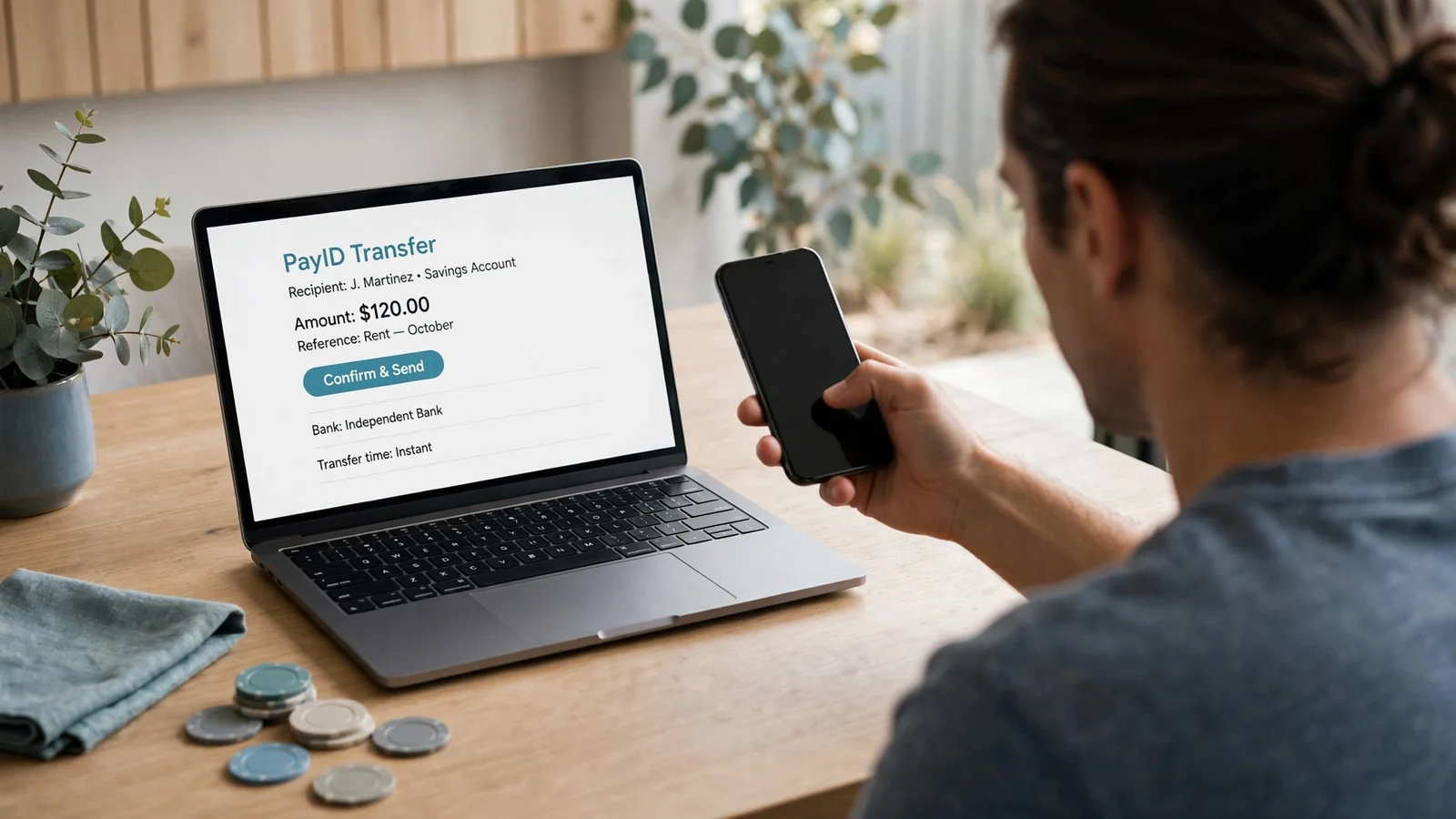
Bitcoin’s public transaction system should not be confused with a guarantee of anonymity or protection from loss. The address is a destination identifier, and the irreversible nature of a confirmed transfer leaves little room for correction. The practical calculation is straightforward: the amount sent, the fee shown by the wallet, the address entered and the status recorded by the receiving service all affect the final outcome. Promotional descriptions of speed do not change those mechanics.
This material is affiliate content and may include sponsored links; that disclosure is not an endorsement. In Australia, real-money online casino games are prohibited for locally licensed providers, and Australian consumer protection laws do not apply to offshore operators. The mechanics above describe how Bitcoin transfers are handled, not a recommendation to use an offshore gambling service. Real-money gambling is restricted to people aged eighteen or older.
How to Assess Terms Without Mistaking Them for Guarantees
A review is evidence of what its writer observed, not a commitment about what an operator will do in a later case. Ratings and summaries can help identify questions, but they do not settle whether a particular bonus applies, how a withdrawal will be assessed, or whether the terms will be interpreted in a player’s favour. This page contains affiliate material and may include sponsored links, so commercial context belongs in the calculation too.
A specialist review recommends looking at review quality, licensing information and the range of pokies. Those are screening points, not a verdict. A useful review explains how it reached its conclusions and distinguishes tested features from claims supplied by the operator. A broad game catalogue, for instance, says little about the conditions attached to a bonus or a withdrawal. A high rating cannot replace the actual terms.
Licensing needs the same scrutiny. Operators discussed in this market hold offshore licences, primarily from Curacao eGaming or the Anjouan Gaming Authority. Those are not Australian licences. Australian law prohibits locally licensed online casinos from providing real-money pokies to residents, and Australian consumer protection laws do not apply to the offshore operators discussed. A foreign licence should therefore be read as information about the operator’s stated regulatory setting, not as a guarantee of local recourse or a recommendation to use the service.

Read the bonus as a calculation
The headline value of a bonus is not the amount available without conditions. The relevant terms include which games contribute to wagering requirements, the contribution assigned to each game, and any limits on how a bonus can be played. If those details are unclear, the value cannot be calculated reliably.
Contributions can vary sharply by game type. Table games may contribute 0%, while pokies may contribute 100%; some high-return slots may be limited to a 50% contribution. The same wager can therefore make very different progress depending on the game selected. A bonus that appears generous can have little practical value if the games a player intends to use contribute less, or if a particular game is excluded or capped.
The calculation should use the contribution rate stated for the relevant game, rather than treating every wager as equal progress. If the terms do not identify how a game is classified, or leave the contribution subject to operator discretion, the uncertainty is part of the cost. It is not resolved by a review calling the offer attractive.
Maximum-bet conditions matter for the same reason. Bonus play may be voided if a player exceeds the permitted bet. A breach can affect the bonus and associated winnings, so the cap needs to be checked alongside the contribution rules before play begins. A vague summary of an offer is not a substitute for the complete terms governing eligible games, bet limits and what happens after a breach.
Separate an assurance from an enforceable term
Promotional descriptions often compress several conditions into a short statement. The terms are where the consequences sit. A sound comparison records the wording about contribution rates, maximum bets, excluded games and the operator’s ability to review activity. If one condition is unclear, its possible effect should not be silently treated as zero.
Attention: Post-win security checks can be used by some operators to prolong payment, especially for new accounts or first substantial withdrawals.
Large wins can also lead to additional scrutiny. Some operators have been reported to use post-win security checks in ways that prolong payment, especially where the account is new or the withdrawal is the first substantial one. That possibility does not establish that every review is improper; it does mean that a general promise of prompt service cannot settle how a specific case will be handled. A review cannot guarantee the outcome of an operator’s later decision.
A stuck withdrawal is not a reason to send more money in an attempt to release it. An additional deposit does not turn a disputed payment into a settled one, and it increases the amount exposed. Bitcoin and Ethereum transfers sent to an incorrect address are generally irreversible and unrecoverable, so the address and destination require careful checking before any transfer.
No comparison can remove the basic limits of the transaction. People must be at least 18 to participate in real-money gambling, and the offshore setting leaves Australian consumer protection laws inapplicable to the operators discussed. Review scores, licence labels and bonus arithmetic can clarify terms; none of them converts those terms into a payment guarantee.
Starting with Bitcoin: Acquisition, Registration and Funding
The sequence has three distinct parts: obtaining Bitcoin, creating an account with a service, and moving funds between wallets. Keeping them separate makes the money trail easier to understand. Buying Bitcoin does not itself create a gambling account, and an account balance shown in a service is not the same thing as Bitcoin held in a personal wallet.

This is a description of transaction mechanics, not a recommendation to use an offshore gambling service. Australian law prohibits operators from providing real-money online casino games to people in Australia. People must be at least 18 to gamble for money. Australian consumer protection laws do not apply to offshore operators, so an account or payment process should not be treated as evidence that a service is lawful or that funds are protected.
Acquiring Bitcoin
Bitcoin can be purchased with fiat currency through a cryptocurrency exchange. The exchange is a separate service from any gambling operator: it handles the purchase and, where supported, lets the account holder send Bitcoin to an external wallet address. The purchase price and the amount ultimately available to transfer can differ because exchange prices and transaction charges may change.
Opening an exchange account commonly involves submitting basic information and choosing a secure password. The account’s security matters because access to it can control funds and withdrawal settings. A password should not be reused across services, and recovery details should be kept private. A person who loses access may face a separate recovery process set by the exchange; a transfer to another wallet does not reverse that problem.
Before sending funds anywhere, the exchange’s available balance and the amount intended for transfer need to be distinguished. A displayed purchase value may include funds that are not yet available to withdraw, depending on the exchange’s own processing. Fees and the Bitcoin network’s transfer charge also affect the final amount received. No fixed conversion from Australian dollars to Bitcoin should be assumed: the price moves, and the relevant figure is the one displayed when a transaction is made.
Acquiring Bitcoin
Open an account with a cryptocurrency exchange by submitting basic information and choosing a secure, unique password.
Purchase Bitcoin using fiat currency, noting that the final available amount may differ from the purchase value due to exchange prices and charges.
Use the exchange or a separate wallet to send Bitcoin to a destination address, ensuring the asset and network selected match the destination’s instructions.
The wallet used to send Bitcoin may be provided by an exchange or held separately. In either case, the sending screen should identify the asset and network being used. A mismatch between the asset or network selected and the destination’s instructions can make a payment fail or become inaccessible. The balance and destination details should be checked before confirming a transfer, rather than inferred from a previous transaction.
Account creation and funding
Creating an account with an online service typically means entering basic details and setting a password. The exact information and account conditions are set by the service. Account creation should not be confused with approval to transact: additional checks may apply, and the service’s terms govern whether a deposit is accepted or credited.
In the payment flow described for Bitcoin, the receiving service displays a wallet address for a deposit. The sender copies that address into the wallet from which Bitcoin will be sent, enters the amount, and reviews the destination before confirming. The address is the critical routing detail. A familiar-looking account name or a saved contact is not a substitute for verifying the full address shown for that specific transfer.
Bitcoin transactions sent to an incorrect address are irreversible and generally unrecoverable. The same warning applies to Ethereum transfers. A mistaken transfer is not equivalent to a card payment that can simply be cancelled through a bank. For that reason, the act of confirming a blockchain transaction should be treated as final, not as a provisional authorisation.

Funding also creates a record in more than one place: the sending wallet or exchange, the blockchain, and the receiving service’s account history. Those records can help identify what was sent and where it was directed, but they do not guarantee that a service will credit or return funds. A transaction can be visible on the blockchain while still awaiting recognition by the recipient. The transfer itself and the service’s account balance are separate events.
If a withdrawal becomes stuck, sending additional money to unlock it is not a sound remedy. A request for a further deposit in exchange for releasing an existing balance should be treated as a serious warning sign, not as a routine funding step. An extra transfer adds exposure without resolving the original problem.
The distinction between acquisition and funding is also relevant to privacy. Bitcoin transfers are recorded on a public blockchain; use of a wallet address does not make a person or transaction automatically anonymous. An exchange account may also be linked to identifying information. Account credentials, transaction records and wallet details should therefore be handled as financial information.
This material is affiliate content and may include sponsored links. That disclosure does not constitute an endorsement or a recommendation to use an offshore gambling service. In Australia, the legal restriction on operators offering real-money online casino games remains the controlling context for any account or payment process described here.
Verification, Delays and Other Failure Points
A Bitcoin deposit can reach the address shown by an operator without appearing in the account straight away. Common causes of non-recognition include reusing an address, sending less than the requested amount, or a delay in the operator detecting the deposit. These are different failure points: a transaction record on the blockchain does not itself confirm that an account balance has been updated.
A transaction record on the blockchain confirms the transfer of funds but does not itself confirm that the operator has detected the deposit or updated the account balance.
The first check is whether the transaction was sent to the address provided for that deposit and whether the amount met the displayed requirement. If the details match, the remaining issue may be detection or account crediting on the operator’s side. Keep the transaction record and any relevant account messages. A payment sent to an incorrect address is generally unrecoverable because blockchain transactions cannot be reversed. Sending more Bitcoin to try to correct an unrecognised deposit adds another transaction; it does not resolve the original one by itself.
Withdrawal delays have a different set of causes. An operator may need to approve a request, wait for identity checks to be completed, or process payments in batches during business hours. Those steps are separate from the blockchain transfer. A request that is still in an approval queue has not yet reached the point where an external Bitcoin transaction can be assessed for confirmation.

The sequence matters. An account can be open while verification remains incomplete. Registration checks form the initial stage; identity and address documents may be requested later, and wallet ownership checks may form a further stage. Stage-two checks may be triggered at a first withdrawal or when cumulative deposits reach a threshold set by the operator. The stated threshold range is AUD 2,000–5,000, but the trigger depends on the operator. A request made before the account has completed the required checks can therefore pause while documents are reviewed.
Crypto-specific verification can involve proving control of the address used to send funds. A specialist review describes possible requests to sign a message from the deposit address or provide a wallet screenshot showing the sending transaction. These are not interchangeable with identity documents: one concerns control of a wallet, while the other concerns the account holder’s identity or address. Requirements may differ, so an account’s displayed instructions are the relevant operational detail.

A specialist review also advises completing later verification stages before requesting the first withdrawal, ideally within 24 hours of registration, on the grounds that this can remove a common cause of payout delay. That is a source’s recommendation, not a guarantee that a withdrawal will be approved or processed promptly. Checks can still lead to questions, and an operator may have a separate approval queue or batch schedule. Completing documentation early can reduce one avoidable hold; it cannot control every step after a request is submitted.
If a withdrawal remains pending, the useful distinction is whether it is awaiting documents, operator approval, or payment processing. The status and any written request should identify the next action required. If information has already been supplied, retain the submission record and follow up through the operator’s stated support channel. Repeated requests for the same material, or a status that does not explain the hold, make it harder to establish what remains outstanding.
A significant win may also be followed by a security review. Such reviews can be legitimate account checks, but some operators may use them to stall, particularly for a new account or a first large withdrawal. The existence of a review does not establish that funds will be released, nor does a delay alone prove misconduct. The practical test is whether the operator identifies a specific requirement and gives a traceable account of the request’s status.
Do not deposit more money to unlock a stuck withdrawal. A demand for an additional payment does not remove an existing verification or approval queue, and it creates a separate financial exposure. The operator’s terms and local protections matter: Australian consumer protection laws do not apply to offshore operators. This material is affiliate content and may include sponsored links; that disclosure does not change the risks or the legal position. Real-money gambling is restricted to adults aged 18 and over.
Can Australians use Bitcoin at online casinos for entertainment?
No, real-money online casino-style services, including pokies, are prohibited when offered to people in Australia. Using Bitcoin does not create an exception.
Is verification required?
Verification may be requested, often at the first withdrawal or when cumulative deposits reach AUD 2,000–5,000, depending on the operator. Crypto checks may also involve signing a message from the deposit address or showing the sending transaction in a wallet.
Are Bitcoin casinos legit?
Some operators discussed hold offshore licences, mainly from Curacao eGaming or the Anjouan Gaming Authority, but these are not Australian licences. They do not make the service authorised under Australian law or provide Australian consumer protections.
Created by the ”Space9 Casino” editorial team.