Real-Money Casino Table Games in Australia: Rules
 Available in AU
A guide to Australian online casino rules, table-game formats and the limits of comparing odds and payment labels.
Table of Contents
- Australia’s Rules for Online Real-Money Table Games
- Bitcoin Table Games: What the Payment Label Does—and Does Not—Tell You
- Table-Game Odds: What Can Be Compared, and What Cannot
- How Blackjack and Dice Games Work at the Table
- Searching for a Casino Nearby: The Limits of an Online Games Guide
- What Counts as an Online Table Game
- Live Dealers and Software-Run Tables
- Card Tables: Betting on a Hand, the Banker, or a Tie
- Roulette Wheels: European, French, and American Layouts
- Poker at the Table: The Aim Is the Best Hand
Australia’s Rules for Online Real-Money Table Games
The legal question comes before the choice of table, payment method or promotion. In Australia, the Interactive Gambling Act 2001 (IGA) prohibits operators from providing real-money online casino games to people physically located in the country. That category includes table games, not just casino-style games that use a different name or presentation.
Section 5 is central to the boundary: operators based in Australia cannot offer residents real-money interactive casino games. The broader framework also prohibits offshore operators from providing those services to customers in Australia. A foreign location or licence does not make an online casino a lawful option for someone playing from within the country. The relevant point is where the customer is located and whether the service is an online casino game for real money.
This distinction matters because a website’s description of itself is not the legal test. Calling a product a table-game room, a live casino, or an entertainment platform does not change the substance of a real-money casino service. Blackjack, roulette, poker and other casino-style games fall within the prohibited category when offered online for money to customers in Australia. The format or branding does not create an exemption.
For real-money table games in Australia, checking the available operator details can help you decide what to investigate before choosing a casino. This list highlights the specific licensing, deposit, and payout information provided for each option.
License: Curacao eGaming OGL/2023/174/0082 (Dama N.V.) · Min. deposit: A$15 LevelUp Casino lists a Curacao eGaming OGL/2023/174/0082 license under Dama N.V. Its minimum deposit is A$15.
License: Curacao Golden Pokies is listed as holding a Curacao license. No deposit or payout details are provided here.
License: Curacao (operating since 2017) · Min. deposit: A$20 Uptown Pokies is listed as operating since 2017 under a Curacao license. Its minimum deposit is A$20.
License: Tobique Gaming Commission · Payout speed: crypto ~10-15 minutes, fiat 1-5 days · Min. deposit: A$30 SkyCrown is listed with a Tobique Gaming Commission license. Its stated payout times are around 10–15 minutes for crypto and 1–5 days for fiat; the minimum deposit is A$30.
License: Curacao Gaming Control Board OGL/2023/176/0095 (Hollycorn N.V.) Rollero Casino is listed with Curacao Gaming Control Board license OGL/2023/176/0095, under Hollycorn N.V. No deposit or payout details are provided here.
License: Curacao · Min. deposit: A$20 (POLi) Lucky Dreams is listed as holding a Curacao license. Its minimum deposit is A$20 when using POLi.
License: Curacao Gaming Control Board OGL/2023/174/0082 (Dama N.V.) SpinsUp is listed with Curacao Gaming Control Board license OGL/2023/174/0082, under Dama N.V. No deposit or payout details are provided here.
License: Curacao · Payout speed: crypto 30-60 minutes, fiat 1-5 days · Min. deposit: A$10 Wild Tokyo is listed as holding a Curacao license and has a A$10 minimum deposit. Stated payout times are 30–60 minutes for crypto and 1–5 days for fiat.
License: Curacao eGaming (Hollycorn N.V., since 2017) · Min. deposit: A$20-30 (depends on the offer) Playfina Casino is listed with a Curacao eGaming license under Hollycorn N.V. and has been operating since 2017; its minimum deposit is A$20–30, depending on the offer.
License: Curacao eGaming (Roby Games Ltd) Roby Casino is listed with a Curacao eGaming license under Roby Games Ltd. No deposit or payout details are provided here.
The Australian Communications and Media Authority (ACMA) is responsible for enforcing the rules and takes action against prohibited services, including blocking access to unlicensed platforms. Blocking is an enforcement measure, not a form of approval for services that remain reachable. Access may be disrupted, and an offshore site appearing on a screen does not establish that it is permitted to serve Australian customers.
The legal position also differs from the question of player liability. The prohibition concerns the provision of the service by operators; it does not make an individual player criminally liable simply for using an offshore casino. That distinction should not be mistaken for permission to provide or promote the service in Australia. Nor does it remove the practical consequences of enforcement, such as a blocked site or interrupted access.
Online promotions do not alter the underlying category. A bonus attached to a real-money table game remains connected to the provision of an online casino service; promotional wording cannot convert a prohibited service into a permitted one. The same applies where an offer is framed around deposits, free play, or a particular table. A headline about the best casino promotions for table games is not evidence that the advertised activity is lawful in Australia.
The word “free” needs similar care. A free-play label, by itself, does not explain the legal status of a product or establish that it can later be used for real-money gambling. The important distinction is whether the service provides real-money interactive casino games to people in Australia. A description that leaves the payment and play conditions unclear cannot settle that question.
Searches for online casino table games often combine several separate ideas: a game format, a live presentation, a bonus, or the ability to play without staking money. Those descriptions may help identify what a product claims to offer, but they do not displace the IGA. Legal status is not determined by which table appears on a menu or how closely a digital version resembles a physical casino.
This is why game comparisons belong after, not before, the legal boundary. Whether a table uses software or a live dealer, and what decisions a game asks players to make, are questions about how it operates. They do not answer whether an operator may offer the service to someone located in Australia. A technically accessible game is not thereby lawful to provide.
For an Australian audience, the resulting position is narrow: real-money online casino table games are prohibited services when supplied to people in the country. Local operators cannot offer them, and offshore operators are not exempt from the prohibition. ACMA enforcement and access blocking are part of that framework. A site’s marketing, its claimed location, and the appearance of a working page do not change the rule.
Bitcoin Table Games: What the Payment Label Does—and Does Not—Tell You
Bitcoin describes a payment method, not a table-game category. A reference to bitcoin does not establish what games are offered, how a particular game works, what its rules are, or whether an operator may lawfully provide it to people in Australia. Those are separate questions, and combining them in a single label does not answer any of them.
A Bitcoin payment label does not verify that transactions are available, how they are processed, or what conditions apply.
The same distinction applies to searches for casino table games that accept Bitcoin. The payment term may signal how a site describes deposits or withdrawals, but it does not verify that those transactions are available, how they are processed, or what conditions apply. No particular speed, fee, limit or advantage follows from the word “Bitcoin” alone. Those details would depend on the service and its terms, and should not be inferred from a game description.
The payment method does not change the legal position
For people physically located in Australia, the Interactive Gambling Act 2001 prohibits operators from providing real-money online casino games. That prohibition covers casino-style games such as blackjack, roulette, poker and other table games. A cryptocurrency payment label does not create an exception or make a prohibited service permissible.
This is a distinction between the operator’s conduct and the payment instrument. The law concerns the provision of the interactive gambling service; changing the stated payment method does not change the nature of that service. Bitcoin is not a separate legal category for table games, nor does a “BTC” label establish that a platform is authorised to offer real-money casino play in Australia.
The Australian Communications and Media Authority enforces compliance and blocks unlicensed domestic platforms. As a result, a claim that an online table is available with Bitcoin should not be treated as confirmation that it can lawfully be offered to Australian residents or that it is practically accessible. A payment label is not a licence, a regulatory approval, or evidence that the service complies with Australian law.

“Bitcoin” does not define the table
The phrase “Bitcoin table game” can make it sound as though the game itself has special rules or a distinct format. The label alone supports no such conclusion. A game’s rules and outcome process are not established by the currency mentioned alongside it. Nor does Bitcoin indicate whether play would involve a live dealer or software-determined results.
That separation matters when comparing Bitcoin table games with games described without a cryptocurrency payment option. The comparison cannot be made on the payment label alone. It says nothing reliable about the rules, the way a hand or round is settled, or the conditions attached to play. Any claim that one format is better, faster, fairer or more private would require evidence beyond the name of the payment method.
The phrase “best Bitcoin casino table games” also bundles two different judgments: which games are preferred, and what a payment method offers. Bitcoin does not identify a best game, and the word “best” has no defined measure by itself. A ranking would need a stated basis and reliable information about the games being compared. A payment label supplies neither.
The same applies to references to top table games, felt tables or casino tables being open. These expressions may describe a search for a particular kind of game or availability, but Bitcoin does not confirm a physical felt table, a live session, an open table, or a particular selection. Such claims must be assessed separately rather than inferred from the currency name.
For Australian readers, the controlling point is narrower and more consequential: real-money online casino table games are prohibited services when offered to people in Australia. Bitcoin does not change that legal status. It is a payment label, not a shortcut around the rules, and it cannot by itself establish a game’s mechanics, availability or quality.
Legal Prohibition
Under the Interactive Gambling Act 2001, real-money online casino table games are prohibited services when supplied to people physically located in Australia.
Table-Game Odds: What Can Be Compared, and What Cannot
A claim that one table game has the “best odds” needs a defined measure. The phrase may refer to the chance of winning a particular bet, the expected return across repeated play, or the house edge. Those measures are related, but they are not interchangeable. A favourable chance of winning one wager does not, by itself, establish the best expected return.
House edge describes the mathematical advantage built into a game over time. To compare that measure, the calculation must use the same basis: the relevant rules, available wagers and assumptions about play. Without that context, a house-edge chart can look precise while comparing unlike conditions. A ranking stripped of its assumptions is packaging, not a calculation.
The structure of a bet also matters. A game may offer several ways to stake money, each with different conditions and potential payouts. Comparing a single wager in one game with a different wager in another does not rank the games as a whole. It ranks those specific wagers under the rules used for the comparison. The distinction is easy to lose in a short “best odds” list.
Rules can change the calculation, too. A result may depend on how a particular version is configured or how decisions are made during play. A broad game name is therefore not always a sufficient unit of comparison. Two tables carrying the same label need not share every rule that affects the mathematics.

Odds also do not predict the next result. They describe probabilities or expected outcomes across a defined set of conditions, not a promise about an individual hand, roll or spin. A short run can diverge from a long-run expectation. That variation does not turn a losing result into evidence that a game has changed its underlying odds, nor does a win establish that a wager is mathematically favourable.
This is why a general list of casino table games with the best odds cannot be treated as a universal ranking. A defensible comparison would identify the exact game version, the wager being assessed, the applicable rules and the calculation used. If any of those elements differ, the numbers may answer different questions. A “worst odds” label has the same weakness: without a specified basis, it is not a useful measurement.
For online table games, outcomes may be determined by a Random Number Generator, including the cards dealt or the roulette pocket selected. That mechanism concerns how an outcome is produced; it does not, by itself, establish a particular return or house edge. The odds still depend on the game and wager being measured.
A careful reading of odds claims separates three things: the chance that a selected wager wins, the payout attached to that wager, and the long-term mathematical return under stated conditions. A chart that supplies only a game name and a ranking leaves those distinctions unresolved. There is no single “best table game” answer that holds independently of the wager and rules being compared.
Odds describe probabilities or expected outcomes across defined conditions, not a promise about an individual hand, roll, or spin.
How Blackjack and Dice Games Work at the Table
Blackjack and dice-based table games use different ways to define a round’s objective. Blackjack compares a player’s hand with the dealer’s; a dice game centres on a pair of dice and bets about their outcome. That difference matters when learning the basic structure: one asks how a hand measures against a target, while the other connects a wager to a dice result.
Blackjack: a hand measured against 21
In blackjack, the player competes with the dealer. The aim is to have a hand value closer to 21 than the dealer’s hand. The number is the reference point for the contest, not a promise that every hand will reach it. The result depends on how the two values compare.
This makes blackjack a hand-versus-dealer game. The player’s objective is not simply to assemble the highest possible total without context; it is to finish closer to 21 than the dealer. A description of the game should therefore distinguish its central target from the actual comparison that determines the contest.

That basic outline is enough to identify what blackjack is about, but it is not a complete set of playing instructions. The objective alone does not specify every decision, rule or table condition. Those details can vary between versions, so a label such as “blackjack” does not, by itself, settle how a particular table operates.
For someone learning how casino table games are structured, blackjack offers a clear example of a contest built around a hand value. The dealer is the opposing point of comparison, and 21 is the benchmark. Neither detail should be confused with a claim about which game is preferable or what result a player can expect.
Dice games: a wager on the outcome
A dice-based table game follows a different structure. Players roll a pair of dice and place bets on the outcome. The dice produce the result; the wager is tied to what happens when they are rolled.
This is a compact description, not a full rulebook. It does not identify every possible bet, explain how individual outcomes are settled or establish the rules of a specific game. Those particulars depend on the game being described. Without them, it would be inaccurate to treat all dice tables as if they offered identical betting choices.
The contrast with blackjack is straightforward. Blackjack centres on comparing a player’s hand with the dealer’s hand in relation to 21. A dice game centres on a pair of dice and the outcome on which a bet has been placed. One is organised around hand values; the other around a dice result.
These descriptions explain the basic objectives, not how to select a table or predict a result. They also do not establish that a particular format is available to play in any location. For Australian readers, that distinction is material: an explanation of game mechanics is not an invitation or confirmation of lawful local availability.
The practical starting point for understanding either game is therefore the objective, followed by the rules that define how a specific version handles its round. Blackjack’s defining comparison is the player’s hand against the dealer’s, with 21 as the reference. In a dice-based game, the defining action is rolling two dice and betting on the outcome. Beyond those foundations, details should be treated as specific to the table rather than assumed from the category name.
Searching for a Casino Nearby: The Limits of an Online Games Guide
A request for a casino close by is a location task, not a request to explain how an online table works. The result depends on where the person is, what counts as nearby and whether a particular venue offers table games. A general guide to online games cannot establish those details or identify the closest suitable venue.
That distinction matters because phrases such as “casino near me with table games” can point to a physical destination. “Near” has no fixed radius: it may mean within a city, a manageable drive or simply closer than another option. Without a defined location and current venue information, naming a nearest casino would be guesswork presented as a recommendation.
The same limit applies to searches for a casino in Miami or casinos in Ohio. Those place names indicate a different geographic context from Australia. They do not establish that a venue is nearby to someone in Australia, nor do they provide evidence about Australian venues. A location phrase in a search does not travel with the person who typed it.

A venue’s existence and its table-game offering are separate questions. Even if a place is identified as a casino, that alone does not confirm which games are available, whether tables are operating at a particular time, or whether the information remains current. A list without a reliable location basis and confirmed details would have little practical value.
The same caution applies to requests for a “new” casino or new table games. “New” could refer to a recently opened venue, a recent addition to a venue’s floor, or an online game release. These are not interchangeable. An online games guide does not verify opening dates, current floor plans or local game schedules, so it cannot convert that wording into a dependable local recommendation.
There is also a legal distinction between visiting a physical venue and using an online casino service. Under Australia’s Interactive Gambling Act 2001, operators may not provide real-money online casino games to people physically in Australia. An online guide should not imply that an offshore website is a substitute for a nearby physical venue or invite Australians to use one. The legal status of a service is not determined by how close its website appears to be.

For a location-based decision, the necessary information is specific: the relevant area, the venue’s current operating details and confirmation of the games it offers. None of those can be inferred from a general explanation of table-game formats. A “closest casino to me” result therefore needs location-specific, up-to-date evidence; a discussion of online tables supplies neither.
This page can clarify game terminology, but it is not a local venue directory. It does not rank nearby casinos, confirm that any particular venue has tables, or establish which venue is nearest to an individual. Keeping those boundaries clear prevents an explanation of online games from being mistaken for a verified destination guide.
What Counts as an Online Table Game
A casino table game is defined by its play format, not simply by the appearance of a table on screen. Online, the term can describe a game in which a real dealer handles casino equipment on a live video stream, or a software-run version in which a random number generator determines the result. Both present table-game play through a digital interface, but the result is produced differently.
A real person deals equipment on a live video stream, showing a physical table in use.
A random number generator (RNG) determines the result through a digital interface.
In a live-dealer format, a real person deals or operates the equipment, and video of the game is streamed to players. The screen shows a physical table in use rather than a result generated entirely by game software. The dealer and equipment are part of the live presentation; the stream is how that presentation reaches the online audience.
A software-run table game does not depend on a live dealer’s actions to generate its result. A random number generator selects the cards dealt or determines where a roulette ball lands. The visual display may represent a table and its equipment, but the deciding process is software-based. In other words, a digital table on screen does not, by itself, mean that a physical table is being filmed.
This distinction helps make the phrase “online table game” more precise. It describes a familiar kind of casino play delivered online, while leaving open whether the result comes from live equipment or a random number generator. The word “table” identifies the style of game; it does not identify the technology behind every result.
The same distinction matters when software is mentioned in a casino context. Software can determine outcomes in a game, while “casino table games management software” refers, by its wording, to software associated with managing table games. Those phrases do not establish that the same system performs both functions. The relevant question is whether a particular game’s outcome is determined by an RNG or shown through a live stream of a real dealer and real equipment.
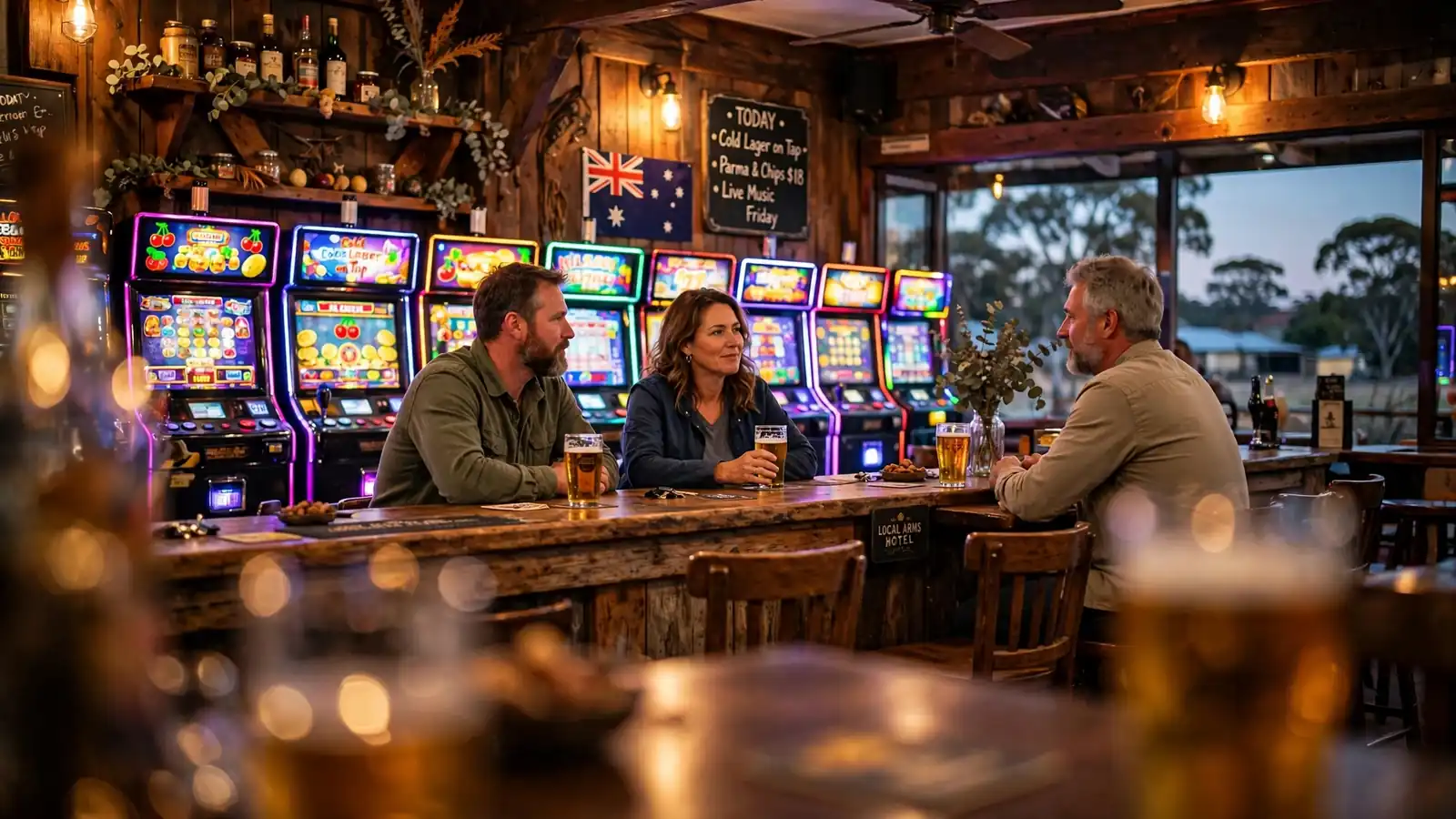
For anyone trying to identify what counts as a table game, the interface alone is an incomplete guide. A game can look like a physical table while relying on software to determine its result. Conversely, a streamed table shows a real dealer and equipment, even though the play is viewed online. The delivery format, rather than the screen design, is the useful dividing line.
This definition also separates the online format from the question of whether a game may be offered in a particular place. “Online table game” describes how a game is presented and how its result is produced; it does not, on its own, establish anything about an operator’s authority to provide it.
Live Dealers and Software-Run Tables
Online table games can be delivered in two broad formats. In a live-dealer format, a real dealer uses real casino equipment, while a video stream carries the action to players. In a software-run format, a random number generator (RNG) determines the relevant outcome, such as which cards are dealt or where a roulette ball lands.
The distinction is about how the game outcome is produced and presented. A live stream shows a physical game in progress; an RNG-based version relies on software to generate the result. Neither label, by itself, describes the rules of a particular game or establishes its odds.
Live-dealer format
A live-dealer table combines physical equipment and a human dealer with online video delivery. The dealer conducts the game at a real table, and the streamed footage shows that activity to remote viewers. The outcome comes from the physical game rather than from software selecting cards or a roulette landing point.
How outcomes are produced
In a live-dealer format, the outcome comes from the physical game. In a software-run format, an RNG selects the cards or determines the roulette ball landing point.
This format can resemble a casino table in its visible elements: a dealer, equipment and a game taking place in real time. The stream is the delivery method, not a change to the underlying distinction between a physical result and a software-generated one. The presence of a dealer on screen should therefore not be confused with an RNG determining the result.
Software-run format
At a software-run table, the RNG determines the outcome specified by the game. For a card game, it determines the cards dealt; for roulette, it determines where the ball lands. The table is presented online, but the outcome is generated by software rather than shown as the result of a dealer operating physical equipment.
The term “random number generator” identifies the mechanism used to produce those outcomes. It does not, on its own, provide a measure of a game’s return or explain every feature of its rules. Those are separate characteristics.
What the labels establish
The two formats can be compared by asking what produces the result. Live-dealer play uses a real dealer and equipment, with video streamed to players. Software-run play uses an RNG to determine outcomes. That is the practical dividing line; “live” describes the streamed physical table, while “software-run” describes how the result is generated.
A casino table-games list can mix formats, so a game name alone does not settle whether play is streamed or RNG-based. The format label concerns delivery and outcome generation, not a ranking of games. “Live” does not mean that software is the source of every result, and “software-run” does not mean that a physical dealer is conducting the game off camera. They identify different ways an online table is produced.
For Australian readers, these descriptions explain the technical formats only; they are not an indication that real-money online casino tables may lawfully be provided in Australia.

Card Tables: Betting on a Hand, the Banker, or a Tie
In baccarat, the betting choice is about which result a wager covers: the player’s hand, the Banker’s hand, or a tie. These are separate outcomes, not different versions of the game. A card table may display all three choices, but the labels alone do not explain how a hand is formed or what a winning wager pays.
The distinction matters when describing casino card tables. A bet on the player’s hand is not the same selection as a bet on the Banker’s hand; a tie is a third option. The wager therefore has two parts to track: the amount placed and the outcome it covers. Without the applicable rules and payout terms, the selection alone does not establish the eventual return.
These categories also separate baccarat from other card-table games. Blackjack, for instance, centres on competing to reach a hand value closer to 21. Baccarat betting instead identifies one of the listed outcomes. Poker has a different focus again: building the best possible hand. Grouping all of these under “card games” does not make their betting structures interchangeable.
A table’s layout can make the choices appear simple, but it does not supply the financial terms. The names of the betting positions are not a statement about their relative likelihood, payout, or value. Those details depend on the rules applying to that specific game, and should not be inferred from the words “player,” “Banker,” or “tie.”
For Australian residents, there is also a separate legal boundary: the Interactive Gambling Act 2001 prohibits operators from providing real-money online casino games, including table games, to people in Australia. The description of baccarat betting categories is therefore informational, not an offer to play.
The concise distinction is that baccarat presents wagers on a player’s hand, the Banker’s hand, or a tie. It describes where a bet is placed, not a promise about the result or the amount returned.

Roulette Wheels: European, French, and American Layouts
Roulette formats are distinguished by the pockets shown on the wheel. European and French layouts share the same numbered arrangement: numbers from 1 to 36, alongside a green zero pocket. The American layout has those numbered pockets and a green zero and double-zero. That extra marked pocket is the clearest visible difference between the American format and the other two.
The European and French versions therefore cannot be told apart by their number layout alone. Both have the same run of numbered pockets and the same green zero. Their names identify separate versions, but the layout detail described here does not supply another visible distinction between them. In contrast, the double-zero makes the American wheel identifiable from its pocket markings.
Reading the wheel layout
The green pocket or pockets are not numbered in the same sequence as the numbered spaces. On a European or French wheel, the green marking is a single zero. On an American wheel, green marks both zero and double-zero. This distinction matters when identifying which version is being shown: the relevant check is whether the wheel has one green zero or also a green double-zero.
The number sequence itself runs from 1 to 36 in the European and French formats. The American format retains those numbered spaces and adds the double-zero marking. A table layout may display betting areas beside the wheel, but the format distinction described here comes from the wheel’s pockets, not from the appearance of the table surface.
These labels are useful for keeping different roulette casino table games separate in a catalogue or rules description. “Roulette” alone does not identify a particular layout; the version name and the zero markings provide the specific information. A picture that shows only the betting grid may not make the wheel format clear, whereas the pockets reveal whether the layout is European, French, or American.
The distinction is descriptive, not a ranking. The number markings identify the format; they do not, by themselves, establish which version is preferable or what result a particular play will produce. For anyone comparing table-game rules, the practical starting point is to confirm the named version and inspect its green pockets before relying on a general label such as roulette.
Poker at the Table: The Aim Is the Best Hand
Poker table games centre on hand-building: players compete to form the best possible poker hand. That objective distinguishes poker from card games in which the main decision is whether to back a player’s hand, the Banker’s hand or a tie. The focus is the strength of the hand itself.
The label covers a broad category rather than one single set of rules. A game described as casino poker may therefore refer to a table format built around comparing hands, but the name alone does not establish how a particular version is played. No specific hand rankings, betting sequence or variant rules should be assumed from the word “poker” alone.
Pai gow poker is another phrase used for a named poker-table format. Its inclusion under the poker label does not, by itself, explain its rules or make it interchangeable with other poker games. The common point is the contest to build the strongest possible hand; details depend on the particular game.
In Australia, that distinction is descriptive, not an invitation to play online. The Interactive Gambling Act 2001 prohibits operators from providing real-money online poker and other casino-style games to people located in Australia. Poker’s familiar objective does not alter that legal boundary.
For a clear account of any poker format, the relevant terms would need to identify how hands are formed and compared. Without those rules, “best hand” describes the central aim, not a complete guide to play.
Written by the editors at Space9 Casino.