Best Pokies in Tasmania: Venue Hours and Location Checks
 Available in AU
Opening hours, return figures, location listings and online-pokies searches each need to be interpreted in context.
Table of Contents
- Opening Hours Are a Venue Question, Not a 24-Hour Guarantee
- What a Pokie’s Return Figure Can—and Cannot—Tell You
- Airport and CBD Searches Need a Location Check
- Venue Reporting and Responsible-Gambling Duties
- The Spirit of Tasmania and Online-Pokies Searches Are Different Questions
- Why a 24-Hour Search Still Needs a Venue Check
- What “Tasmania Pokies” Can Reliably Mean
- Online Pokies: Legal Status and the Limits of Offshore Play
- CBD Clubs and the Information Available About Them
- Cashless Payments, PayID and the Newcastle Search
Opening Hours Are a Venue Question, Not a 24-Hour Guarantee
A venue’s opening status is a practical detail, not a property of Tasmania’s pokies as a whole. A result suggesting that pokies are open now can only be useful when it refers to the specific venue, the relevant part of that venue and the time the information was checked. Without those details, “open” may describe a general listing rather than confirm that the gaming area is operating.
The distinction matters because a venue and its pokie facilities are not necessarily the same thing for purposes of opening hours. A building might be open for another service while the gaming area is unavailable, or a listing might show standard business hours without clarifying whether those hours apply to the machines. The displayed status should therefore be treated as a lead, not as confirmation of access to pokies.
For a useful check, the information needs to answer a narrow question: will the gaming area be open at the intended time? A venue’s own current notice or direct confirmation is more relevant than a broad map label or a result copied across multiple directories. If the information does not specify the gaming area, it has not settled the point. A busy venue can still have a closed gaming area; an “open” badge does not do the accounting.
Choosing pokies in Tasmania means finding an online casino that suits your preferences and checking its stated licensing and payment details. This list provides a concise reference to the available facts for each option.
License: Curacao eGaming OGL/2023/174/0082 (Dama N.V.) · Min. deposit: A$15 LevelUp Casino is listed under Curacao eGaming license OGL/2023/174/0082, held by Dama N.V. Its minimum deposit is A$15.
License: Curacao Golden Pokies is listed with a Curacao license. No deposit or payment details are provided.
License: Curacao (operating since 2017) · Min. deposit: A$20 Uptown Pokies has operated since 2017 and is listed with a Curacao license. Its minimum deposit is A$20.
License: Tobique Gaming Commission · Payout speed: crypto ~10-15 minutes, fiat 1-5 days · Min. deposit: A$30 SkyCrown is licensed by the Tobique Gaming Commission. Its stated payout times are around 10–15 minutes for crypto and 1–5 days for fiat; the minimum deposit is A$30.
License: Curacao Gaming Control Board OGL/2023/176/0095 (Hollycorn N.V.) Rollero Casino is listed under Curacao Gaming Control Board license OGL/2023/176/0095, held by Hollycorn N.V.
License: Curacao · Min. deposit: A$20 (POLi) Lucky Dreams is listed with a Curacao license and a A$20 minimum deposit via POLi.
License: Curacao Gaming Control Board OGL/2023/174/0082 (Dama N.V.) SpinsUp is listed under Curacao Gaming Control Board license OGL/2023/174/0082, held by Dama N.V.
License: Curacao · Payout speed: crypto 30-60 minutes, fiat 1-5 days · Min. deposit: A$10 Wild Tokyo is listed with a Curacao license. Its stated payout times are 30–60 minutes for crypto and 1–5 days for fiat, with a A$10 minimum deposit.
License: Curacao eGaming (Hollycorn N.V., since 2017) · Min. deposit: A$20-30 (depends on the offer) Playfina Casino is listed with a Curacao eGaming license held by Hollycorn N.V. and has operated since 2017; its minimum deposit is A$20–30, depending on the offer.
License: Curacao eGaming (Roby Games Ltd) Roby Casino is listed under a Curacao eGaming license held by Roby Games Ltd. No deposit or payment details are provided.
Read opening information at the right level
Opening information can refer to different things: the venue’s overall operating hours, a particular service, or the area containing the gaming machines. Those labels should not be treated as interchangeable. A general listing may be accurate about the premises while saying nothing conclusive about whether pokies are available.
The same caution applies to opening and closing times shown in search results. They may be useful for planning, but they should be checked against the venue’s current information before making a trip. A listing can remain visible after its details have changed, and repeated copies of the same information are not independent confirmation. The number of places displaying a time does not improve its accuracy if all of them rely on the same outdated entry.
The question is not whether a venue has ever operated pokies, nor whether it is generally described as a gaming venue. It is whether its gaming area is operating at the time in question. That distinction keeps an apparently simple status check from becoming an unnecessary journey.
Early and late opening claims
Requests for very early or late access need the same venue-specific check as any other time. A phrase such as “open early” does not establish a start time, and “open late” does not establish when gaming stops. The exact hours need to come from current information about the particular venue and its gaming facilities.
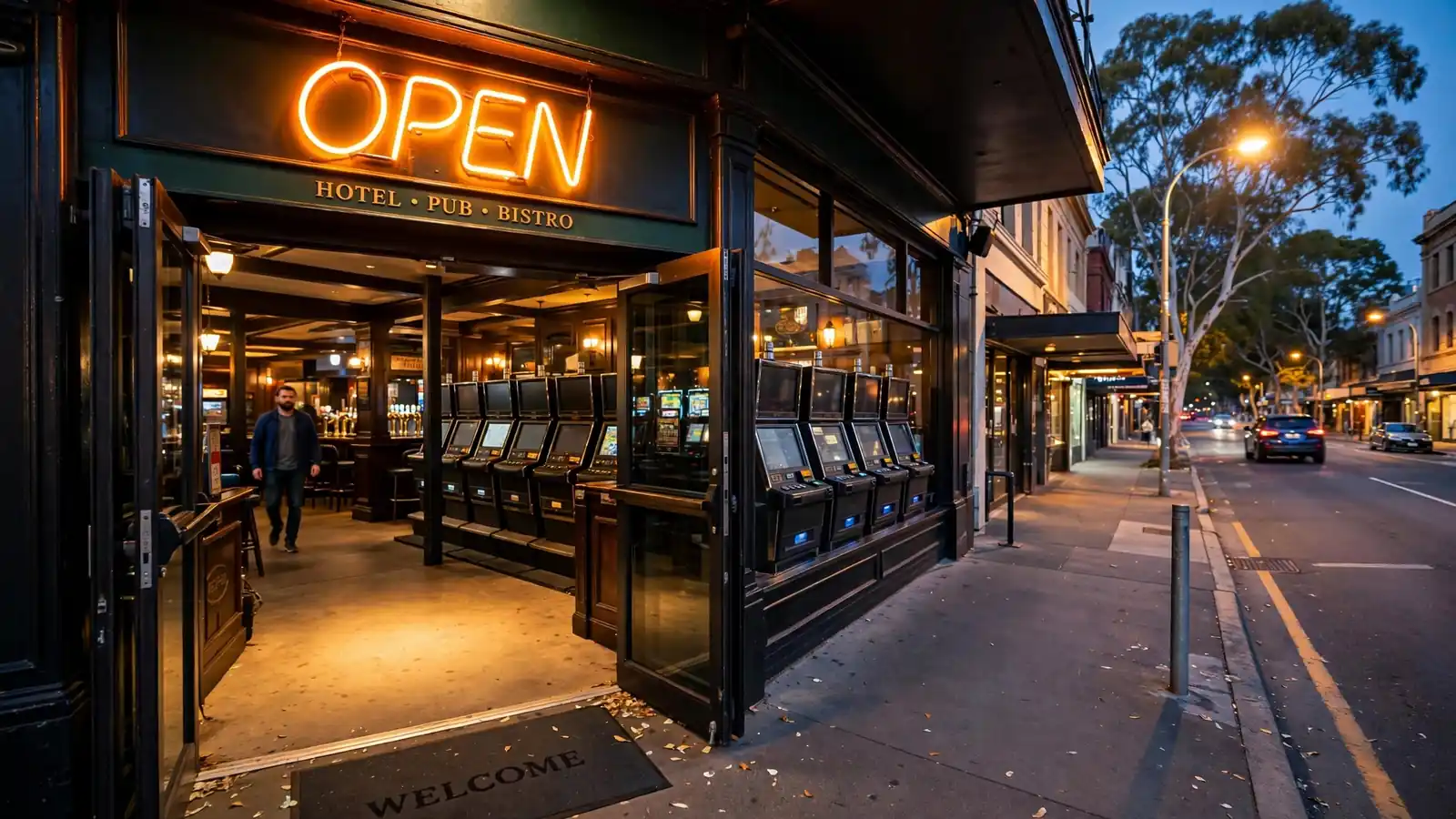
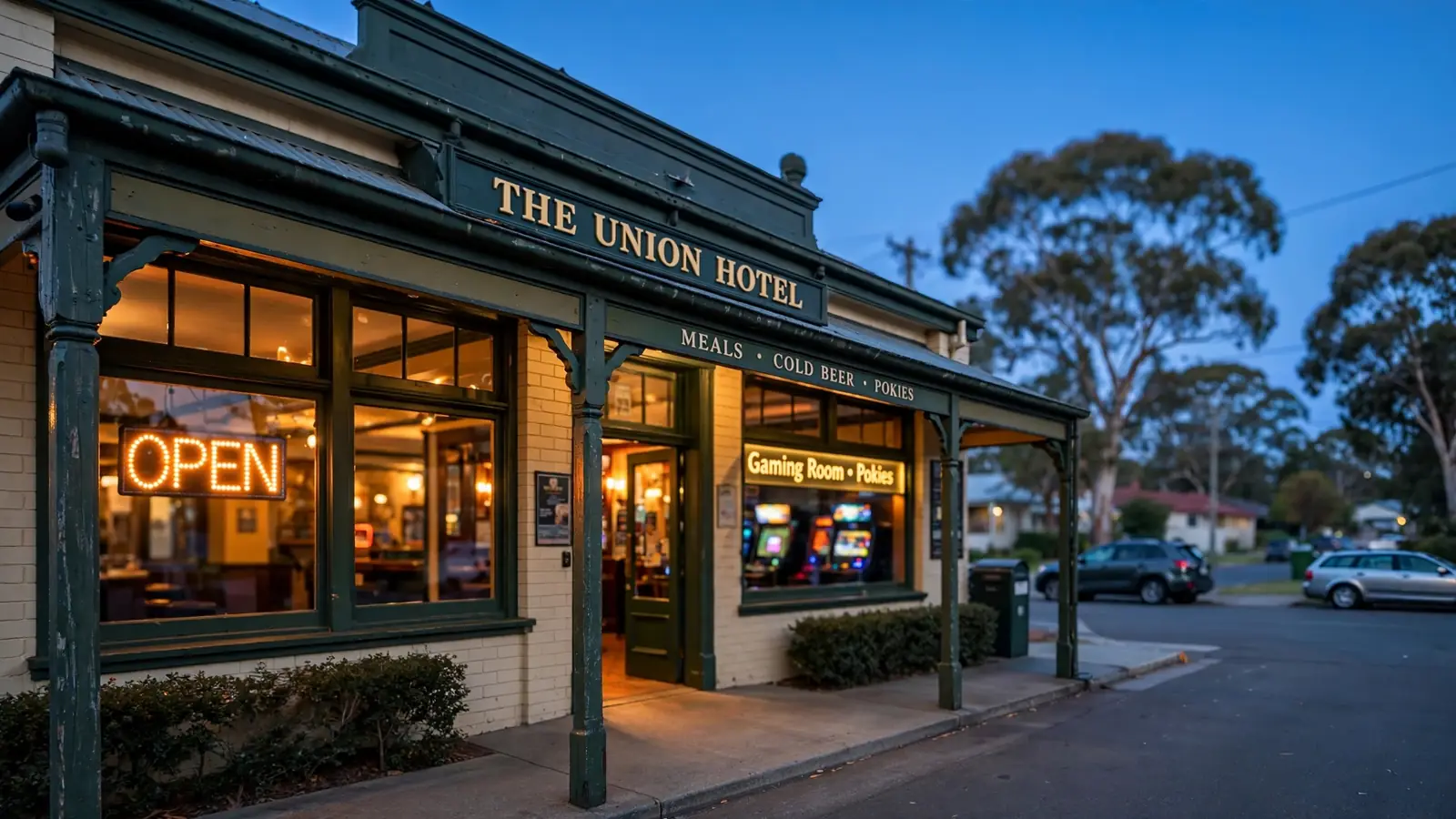
A time appearing beside a venue name can also be ambiguous. It may refer to the whole premises, a different service, or the venue’s usual schedule rather than its status today. When the distinction is unclear, direct confirmation is the more useful answer. It can establish whether the gaming area is open at the intended time, rather than requiring an assumption from a general label.
“Open now” is especially time-sensitive. Its meaning depends on when the status was updated and on the local time being applied. A result viewed later may no longer describe the same situation. For a planned visit, an opening schedule is not a substitute for a current check if the status could have changed.
What a venue check should establish
Before relying on a listing, confirm that it identifies the correct Tasmanian venue and gives information relevant to the gaming area. Then check whether the stated hours apply on the intended day and whether the status is current. If any part is unclear, contact the venue and ask specifically about pokie availability at that time.
The wording used in a listing can also create a mismatch. “Open” may mean that the premises are accessible, while a search result about pokies may lead a person to expect the gaming facilities to be available. A precise confirmation avoids treating those two statements as equivalent. If the venue cannot confirm the gaming area’s hours, the status remains uncertain; a general opening label does not fill the gap.
- Check the venue’s own current notice for gaming area status
- Confirm if the gaming area specifically is operating
- Verify opening hours for the intended day of visit
- Treat a general venue “open” badge as confirmation of pokie access
- Rely on broad map labels or copied directory listings
- Assume standard business hours apply to the gaming area
A search involving “Crown” and Tasmania also needs the same basic identification check. The word alone does not establish which venue is meant or confirm that a relevant Tasmanian gaming area is open. Before relying on any result, the venue’s identity and location must be clear, and its own information must support the claimed opening status. A familiar brand term is not a timetable.
Opening hours answer a limited question: whether a particular venue’s gaming area is operating at a particular time. They do not establish that all Tasmanian venues share those hours, and a general result cannot make that decision on a venue’s behalf. The dependable unit is the individual venue, checked for the intended time.
What a Pokie’s Return Figure Can—and Cannot—Tell You
A return figure can help describe a pokie’s configured payout model. It cannot identify a guaranteed result, predict the next spin or establish that a particular game is the best choice in Tasmania. The distinction matters when comparing games found at a casino, in a CBD venue or in material describing pokies more generally: a published percentage is information about a setting, not a promise attached to an individual play.
A specialist review reports that some game providers allow casinos to choose between different return-to-player settings for the same pokie. As a result, a game carrying the same title may have different stated return percentages in different casinos. The title alone does not establish which setting is in use. A figure needs to be tied to the particular game configuration and venue information before it can support a comparison.

That distinction limits what a claim about the “best-paying” pokies can responsibly mean. A higher stated return figure, if verified for the configuration being discussed, describes one aspect of the game’s model. It does not show that a player will receive that share back during a particular session, nor does it make the game a reliable way to obtain a particular amount. A ranking based only on a game name or an unqualified figure leaves out the setting that gives the number its context.
A long-run measure, not a session forecast
Return-to-player figures are often read as though they were a forecast for a person’s next visit. That is not what they can provide. They concern the game’s configured return model, rather than a timetable for payouts or an amount due to any one player. A figure does not say when a return will occur, how it will be distributed across plays, or whether a particular session will finish ahead or behind.

The difference is practical. A percentage may appear precise, but precision in the stated model does not remove uncertainty from individual outcomes. It cannot be converted into a personal prediction by multiplying it by a planned stake or by assuming that a short run of play will mirror the figure. The arithmetic may look neat; the inference is not.
Every spin is generated separately through the game’s Random Number Generator. The outcome of one spin does not make a particular outcome on the next spin due, more likely or less likely. A run of losses does not create an obligation for the game to pay, and a recent win does not establish that another is approaching. Previous results are records of what happened, not signals that determine the next result.
This is why a return figure cannot settle claims about the best pokies in Tasmania. It may be one comparison point where reliable information identifies the actual setting, but it cannot prove that a game will pay well in a particular venue or session. Nor does a game’s availability in a Tasmanian casino, city venue or CBD location show anything by itself about its return configuration.
Every spin is generated separately through a Random Number Generator, meaning the outcome of one spin does not make a particular result on the next spin more or less likely.
What a fair comparison needs
A useful comparison keeps the claim and the evidence at the same level. If the claim concerns a particular pokie’s return figure, the information should identify the setting for that game, not simply its title. If the setting is not identified, the number should not be treated as a confirmed figure for every casino carrying that game. The same caution applies when figures are repeated in descriptions of casino pokies: a general reference may not tell which configuration it concerns.
Even with a setting identified, the figure remains a model description rather than an outcome guarantee. It cannot show that one player will recover a specified share of their stakes, or that a visit to a venue will produce a positive balance. Those conclusions go beyond what the number measures.
The disciplined reading is therefore narrow: a return figure can describe a configured feature of a pokie, and configurations may differ between casinos for the same game. It cannot identify a winning session, make separate spins dependent on past results, or establish a universal winner among games available in Tasmania. For any game-level comparison, the configuration is part of the claim—not a footnote that can be ignored.
Airport and CBD Searches Need a Location Check
A request for pokies near an airport or in a central district is useful only after the place itself has been identified. “Tasmania airport” does not specify which airport or terminal area is intended, while “near Tasmania” could refer to a broad region rather than a practical point from which to travel. A map result can look relevant and still be inconvenient because the location phrase is imprecise.
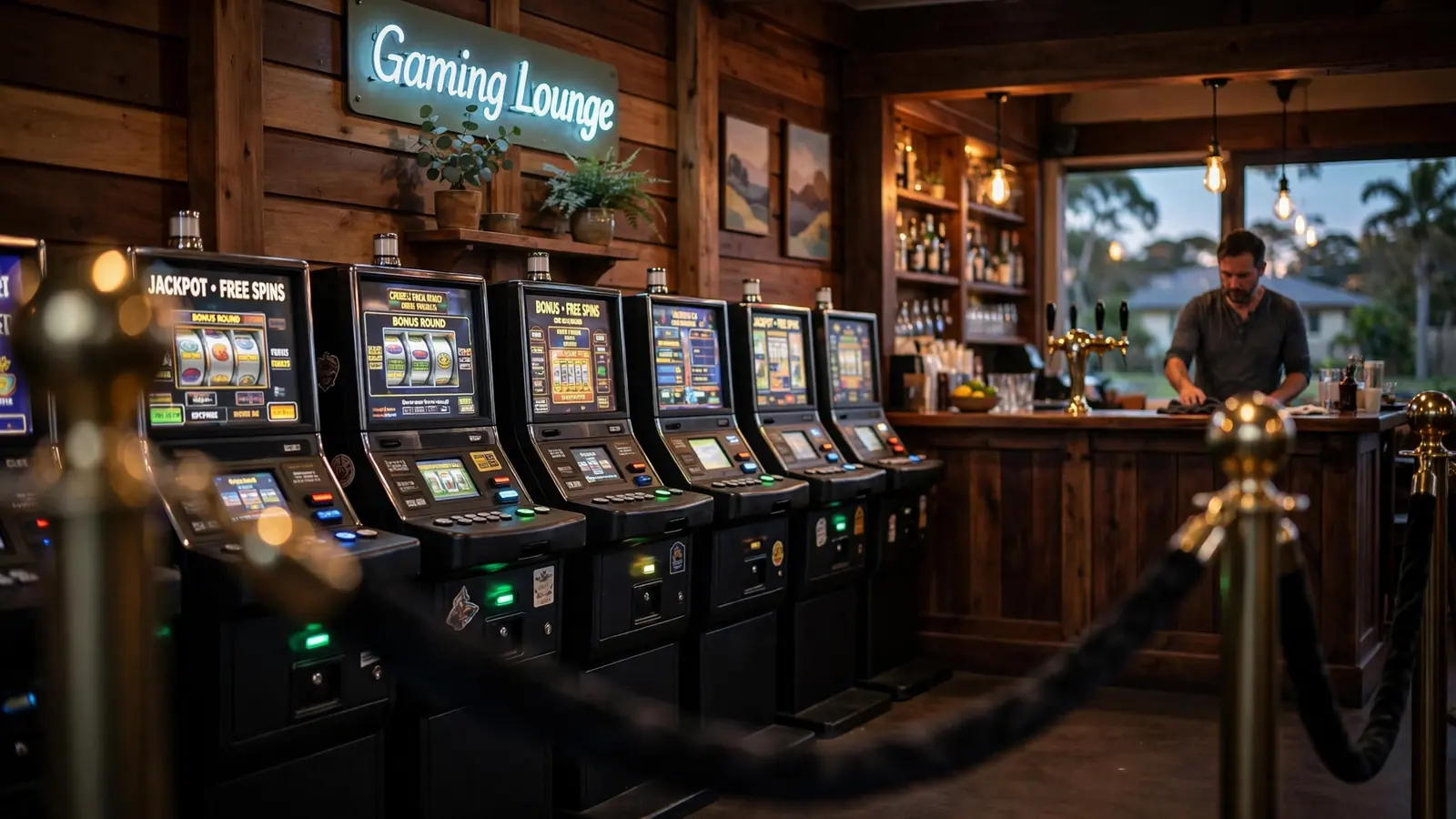
The same issue applies to searches mentioning a CBD. Tasmania has more than one urban centre, so “CBD” alone does not identify a particular central district. A result associated with one city should not be treated as evidence about another. “North Tasmania” is similarly broad: it describes a region, not a precise starting point or a defined travel radius.
Before relying on a listing, the location needs to be narrowed to the airport, suburb, town or central area that matters. Then the listing itself should be checked for a usable address and a clear indication of what premises it describes. Search results may combine nearby businesses, outdated entries and map pins that are not at the venue entrance. A label or preview is not a substitute for confirming the actual destination.
“Near me” depends on the device’s location settings and the point from which the result is calculated. That point may not match a traveller’s intended starting place, particularly when planning ahead or searching while moving between locations. A result ranked close on screen does not, by itself, establish a convenient route, walking distance or reliable travel time. Those details depend on the exact origin, route and current conditions.
Airport wording also needs to be read literally. A request about premises inside an airport is different from one about places in the surrounding area. A result using an airport name may refer to a nearby location rather than a facility within the airport. The distinction matters before making travel plans; a familiar place-name in a listing does not confirm that the premises are on airport grounds.
Attention! A result mentioning an airport or CBD may refer to a nearby location rather than a facility within the airport or a specific central district.
Likewise, “Tasmania, VIC” may reflect a mistaken or mixed location entry rather than a clear Tasmanian destination. Victoria and Tasmania are separate state references, so the place shown on the map should be checked rather than inferred from a combined phrase. A map pin, suburb label and address should agree before the result is treated as relevant.
For a central-district search, the useful check is whether the result belongs to the intended city and the intended part of it. Broad labels such as “CBD” can conceal differences between a central location, a district just outside it and a listing that merely uses a city name for visibility. No particular venue, distance or machine count can be established from a broad location phrase alone.
The same practical limit applies to searches for pokies across Tasmania: they do not identify a single destination until a town or area is specified. The location should be confirmed independently of a result’s prominence or wording. Gambling in Australia is restricted to adults aged 18 and over; proximity does not change that requirement.
Venue Reporting and Responsible-Gambling Duties
A venue’s machine count and its procedures for responding to gambling harm are separate questions. A title such as “best pokies venue” cannot establish either. Reporting duties, where they apply, are more concrete: they concern who is present to respond and what the venue records when a concern arises.
A report by regionriverina.com.au describes a requirement applying from 1 July to venues with more than 20 gaming machines: a dedicated responsible gambling officer (RGO) must be on duty while the machines are operating. The report also describes a one-month grace period for venues to introduce the officer role and remove signage. These details should not be treated as confirmation that the same rule applies to every Tasmanian venue; the relevant jurisdiction and current requirements need to be established before drawing that conclusion.
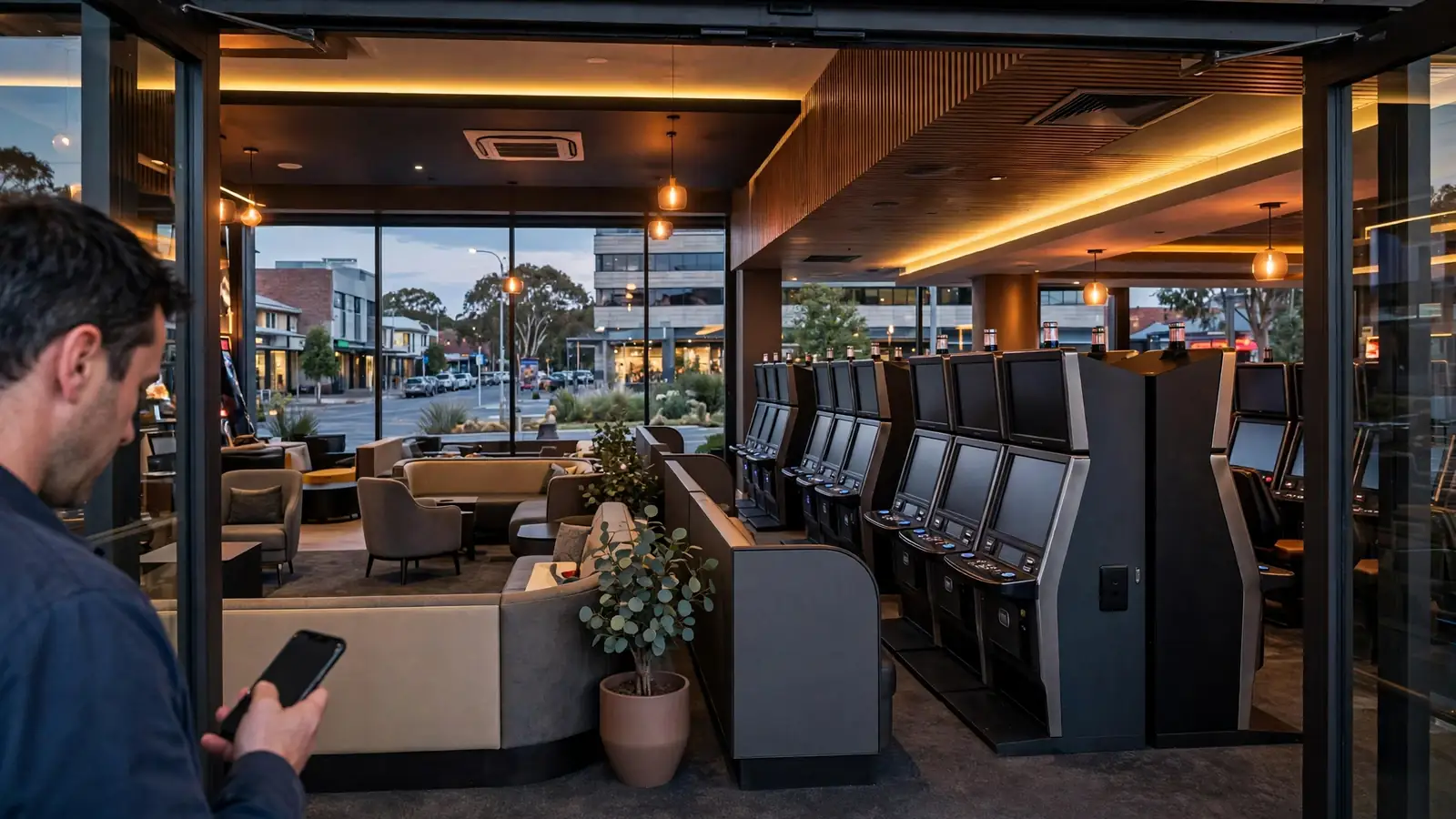
The role matters because a written policy alone does not show how a venue handles a situation as it unfolds. An RGO is a designated point of responsibility while machines are operating. That is different from assuming that any staff member on the floor has the same assigned function. For someone comparing venues, the useful distinction is between a stated procedure and a named role with an on-duty requirement.
The same report describes a gambling incident register for recording occurrences, including behaviour suggesting that a patron may be at risk of, or affected by, gambling harm. A register creates a record of incidents rather than leaving every response as an informal exchange. Its existence does not, by itself, establish the quality of a venue’s response, but it does make record-keeping part of the described duty.
Signage is another operational detail, not decoration. Signage directing patrons to gaming lounges should be removed if it is within eyeshot of ATMs or EFTPOS terminals. Signage directing patrons to ATMs should be removed if it is within eyesight of gaming machines. Those placement rules matter when assessing how a venue presents access to gambling and cash around its machines.
For Tasmania pokies venues, the practical assessment is therefore not a ranking based on a label such as “best”. It is whether the relevant rules apply to that venue, whether the required responsible gambling officer is on duty when required, and whether incidents are documented under the applicable process. A machine count may indicate which threshold to check, but it does not prove compliance. Nor does a register prove that a particular incident was handled well. The distinction is straightforward: an obligation describes what a venue must do; evidence of the venue’s practice shows whether it is doing it.
Venue Compliance
- RGOs must be on duty in venues with over 20 machines
- Gambling incident registers are used to record at-risk behavior
- Signage must be placed to avoid directing patrons between ATMs and gaming machines
- Compliance is based on actual practice, not just the presence of a policy
The Spirit of Tasmania and Online-Pokies Searches Are Different Questions
A reference to pokies aboard the Spirit of Tasmania concerns the ferry and its onboard facilities. It does not establish that pokie machines are available during a crossing. The phrase may appear alongside information about travel, entertainment or gambling, but those subjects are not interchangeable. Any claim about onboard facilities needs confirmation from the ferry operator’s current information; a search phrase alone is not evidence of what is offered on a particular sailing.
The same distinction applies to wording that pairs the ferry with pokies. It could reflect a question about whether games are available during the trip, rather than a request to play online. Treating the two as the same would turn an unanswered facilities question into an assumption about access. Nothing in the wording itself confirms that a machine is installed, operating or available to passengers.
Ferry facilities and online play
Online pokies are a separate matter because they concern real-money gambling provided through an internet service, not a physical venue or a ferry facility. In Australia, the Interactive Gambling Act 2001 prohibits companies from offering real-money online pokies to people in Australia without a domestic licence. No domestic licences for this service have been issued, and there is no Australian-licensed online casino.
That legal position matters even when a page uses familiar casino language or presents an offer as a no-deposit bonus. A promotional label does not create a domestic licence or change the nature of real-money online play. “No deposit” describes a claimed offer condition, not proof that the service is lawfully licensed in Australia. A bonus is still a set of terms attached to a service; it is not a regulatory status.
Queries combining Tasmania with real-money online pokies or a no-deposit offer therefore should not be read as evidence that a locally licensed online casino exists. Nor does the word “Tasmania” establish that a service is based in the state. Location terms can describe the intended audience, but they do not determine which law applies to a gambling operator.
References to Crown and Tasmania also need to be kept separate from the ferry question. A casino name in a phrase does not confirm that a Crown casino operates in Tasmania, that a particular venue has pokies, or that online play is available through it. Those are distinct claims requiring their own reliable confirmation; combining the words does not supply it.
For a decision about the ferry, the relevant point is whether the operator confirms the specific onboard facility. For a decision about online real-money pokies, the relevant point is the legal status of the service in Australia: there is no Australian-licensed online casino. The two questions have different evidence and different answers; neither can be settled by putting “Spirit of Tasmania,” “Crown” or “no deposit” beside the word pokies.
Why a 24-Hour Search Still Needs a Venue Check
A round-the-clock listing is a claim about a venue’s operating schedule, not a standing guarantee that its pokies will be available at every hour. The distinction matters: a venue may have hours that differ from the hours of its gaming area, and an online listing may not spell out which one it describes.
Understanding 24-Hour Listings
A round-the-clock listing is a claim about a venue’s schedule, not a guarantee. A venue may be open 24 hours while its specific gaming area has different operating hours, or may be subject to temporary closures and public holiday changes.
For anyone assessing whether Tasmania has a venue with 24-hour pokies, the useful confirmation is venue-specific. Check directly whether the gaming area operates continuously, rather than relying on a general business-hours panel or a result labelled “open 24 hours”. Confirm the relevant date as well. A schedule that applies on one day may not describe a public holiday, a temporary closure or a change to operating arrangements.
Search wording such as “24-hour pokies open now” combines two separate conditions: continuous operation as a general schedule and availability at a particular moment. The first requires confirmation that the venue’s stated hours cover the full day; the second depends on the venue’s current status. Neither label settles the other. A result can be useful as a starting point, but it is not a substitute for checking what the venue says about its gaming facilities.
The same care applies when comparing Tasmania pokies opening hours. A map listing may show a venue’s overall hours, while a venue website or direct enquiry may clarify whether pokies are operating for that entire period. If the information is unclear or inconsistent, the practical answer is not to infer a 24-hour schedule from one listing. It is to treat the hours as unconfirmed until the venue gives a clear answer.
A long operating schedule also says nothing about whether gambling is affordable or suitable. Deposit limits, loss limits and session time limits are tools for setting boundaries, while self-exclusion is an option for stopping access. These controls address gambling behaviour; they do not establish a venue’s timetable or make continuous availability a benefit.
The cost of checking is small compared with the inconvenience of planning around an assumption. “Open all day” can refer to the premises, not necessarily to every service inside them. A clear confirmation should identify the gaming area and the hours that apply, not merely repeat a general opening label. That is the distinction that turns a 24-hour search result into usable information.
What “Tasmania Pokies” Can Reliably Mean
A pokie described as available in Tasmania is a game that can be found at a venue there. That is a statement about location, not evidence that the game pays more often, offers a larger win or suits every player. Availability and performance are separate questions; one cannot establish the other.
The label “best” is less precise still. It might refer to a player’s preferred theme, the way a game plays or a particular feature, but it does not create a reliable ranking of likely results. Without a defined measure and verifiable information about the specific game, a superlative is packaging rather than a useful comparison.
The result of each spin is determined by a Random Number Generator, and each spin is an independent event. A previous win does not make another win due, and a run of losses does not make a win more likely on the next turn. A pattern visible in recent results is not a forecast. Treating it as one assigns meaning to events that do not alter the next spin’s random outcome.
Questions about a maximum bet or the largest cash payout concern the rules of a particular game and, where relevant, the terms applying at a particular venue. Those details should be checked in the game information and venue material before play. A game’s name or presence in Tasmania does not establish either limit. Nor does a high stated ceiling indicate how likely it is to be reached; the ceiling describes a possible bound, not a prediction.
Game Comparison
Reliable comparison requires separating game availability, displayed rules, and the random nature of individual spins.
The same distinction applies when comparing games called pokies in Tasmania. A local listing can help identify where a game is available, but it cannot support a general claim that one game is “best” across venues. The game’s displayed rules can clarify how it operates; they cannot convert random outcomes into a dependable expectation.
For searches that mention a town or a specific type of play, the wording alone does not confirm that a named game or feature is available there. Location should be established separately, and the relevant machine information should be read on its own terms. A broad description of Tasmania pokies is not a substitute for those checks.
A sound comparison therefore keeps three matters apart: whether a game is available at a given venue, what its displayed rules say, and what can be expected from an individual spin. The first two can be checked. The third cannot be predicted from past outcomes. Any ranking that blurs those distinctions makes a claim the random process cannot substantiate.
Online Pokies: Legal Status and the Limits of Offshore Play
A search for online pokies in Tasmania can blur two separate questions: whether an operator may legally provide the service in Australia, and whether an individual player is liable for using an offshore site. The legal position distinguishes between them.
Under the Interactive Gambling Act 2001, companies must not provide real-money online casino games to people in Australia without a domestic licence. No Australian online casino licences have been issued. The restriction therefore applies to the operator offering the service, not to an individual player. Australians are not criminally liable simply for playing on an offshore site that accepts them.
That distinction does not make offshore play equivalent to using an Australian-regulated casino. An offshore operator does not become locally licensed because it accepts Australian customers, displays payment options used in Australia, or describes itself as available to Tasmanians. There is no Australian-licensed online casino.
The practical exposure is clearest when a withdrawal is disputed. If an offshore casino refuses to pay winnings, an Australian player has no legal recourse in Australia to recover them. A balance shown on a screen is not the same as money successfully received; the operator controls the account and payment process, while Australian legal remedies do not provide a route to enforce that claim against it.
Location wording does not alter this position. “Near Tasmania” may describe a physical venue, but an online service does not become local because it can be accessed from the state. Nor does a claim about high limits, large payouts or “best paying” games establish that an operator is authorised in Australia or that winnings will be paid. These are separate matters, and one does not prove the other.
BetStop is also limited in scope: it applies to Australian-licensed operators and does not bind offshore sites. It should not be treated as a control that can enforce a self-exclusion request across an offshore service.
The financial decision is therefore not simply whether a site accepts a deposit. It includes the possibility that funds or winnings may be withheld without an Australian legal remedy. Operator-facing restrictions and player liability are different parts of the law; neither turns offshore access into a locally protected service.
Legal Risk
There are no Australian-licensed online casinos; using offshore sites means you have no legal recourse in Australia if an operator refuses to pay winnings.
CBD Clubs and the Information Available About Them
A search for pokies in Tasmanian clubs combines two separate filters: the type of venue and its location. “Club” may describe a licensed social or community venue, while “CBD” points to a central business district. Neither label, by itself, confirms that a particular venue has pokies, how many it has, or whether it suits a particular need.
That distinction matters when comparing results. A listing that describes a club in a city may not establish that it is in the CBD; a venue described as central may not be a club. Names, maps and directory categories can help identify a candidate, but they are not a substitute for current information from the venue. Machine counts and rankings should not be inferred from a venue’s size, reputation or category.
“Best” is also not a measurable description unless the basis is stated. A result may reflect location, facilities or user reviews rather than any verified feature of the pokies. Without a clear criterion and current supporting information, a ranking is an opinion, not evidence that one club is better than another.
For a CBD-specific check, confirm the exact location independently and make sure the venue’s own information identifies it as a club. For a club-specific check, confirm that the venue itself describes its operation and facilities clearly. These steps narrow the category; they do not establish machine numbers or performance.
Self-exclusion is a separate consideration from location. It is a responsible-gambling tool, but the terms and practical scope of an option should be checked with the organisation providing it. A search result alone cannot establish whether an exclusion applies to one venue or more broadly, or how it is administered. That detail matters more than a venue’s promotional description.
The legal gambling age in Australia is 18, including for online pokies. For an in-person club visit, age restrictions and entry conditions should be confirmed with the venue rather than assumed from a directory listing.
A useful comparison therefore records only what can be confirmed: whether the place is a club, whether its location is genuinely central, and whether its own information addresses the facilities of interest. If any of those points is unclear, the listing has not answered the practical question. No club name, machine count or “best” ranking can be supplied reliably without current, venue-specific evidence.
Cashless Payments, PayID and the Newcastle Search
“Cashless” can describe different things: how a venue accepts or dispenses money, or how an online service takes a bank transfer. Those are not interchangeable. A venue’s use of cashless payments cannot be inferred from the word PayID, and a PayID option does not establish that an online gambling service is lawful, fair or transparent.
PayID is an alias system connected to Australia’s New Payments Platform. It lets a transfer be addressed using an email address, mobile number or ABN, rather than bank account details. That describes the payment route, not the business receiving the funds. The transfer method does not verify a venue’s machines or establish anything about a game’s terms.
For real-money play at an Australian online casino, using PayID would require linking it to a bank account first. That payment detail does not change the legal position: Australian law prohibits operators from providing real-money online casino games to people in Australia, and no domestic online casino licences have been issued. PayID is a bank-transfer mechanism, not a workaround or a licensing mark.
A request about cashless pokies in Tasmania therefore needs to be assessed as a venue-payment question, not answered from information about PayID alone. The relevant detail would be the specific venue’s own payment arrangements; the existence of a transfer alias cannot confirm them.
The place name also matters. Information about a venue in Newcastle cannot be treated as information about a venue in Tasmania unless the particular location is established. “Best” is not a payment feature: it requires verifiable grounds for comparison, while a cashless option by itself says nothing about the quality or outcome of play. A reliable assessment keeps location, venue payment arrangements and online transfer methods separate.
What is the legal age for online gambling in Australia?
You must be at least 18 years old to gamble online in Australia.
Are online pokies legal for Australian players?
Yes, Australians can legally play on offshore sites that accept them, but no Australian-licensed online casino operates. The law targets operators offering real-money online pokies without a domestic licence.
Do PayID deposits qualify for bonuses?
Yes, PayID is treated like any other qualifying deposit method for bonuses.
Prepared by the Space9 Casino editorial staff.