Pokies in Canberra: Hours, Access and What’s Verified
 Available in AU
Venue listings, machine access and return-to-player figures do not establish current availability; this guide separates what can be checked from what remains uncertain.
Table of Contents
- Checking Canberra Venue Hours Before Travelling
- What Return-to-Player Figures Can—and Cannot—Show
- Online Pokies: The Australian Legal Position
- Airport and Other Nearby Venue Searches
- Venue Machine Oversight and Gambling Incidents
- Why 24-Hour Availability Cannot Be Confirmed
- Crown Casino Searches and the Limits of Verified Information
- CBD Clubs: What the Available Facts Do Not Establish
- Pokies Searches for Parkes
- Cashless Play and the Newcastle Search
Checking Canberra Venue Hours Before Travelling
A venue’s opening time is a point-in-time detail, not a dependable feature of a general listing. Whether any Canberra pokies venue is open at a particular moment cannot be established without current confirmation from the venue itself. A time shown elsewhere may be old, incomplete or apply to the premises rather than to access to pokies.
That distinction matters when a trip depends on the machines being available. A venue may have public opening hours that do not, by themselves, confirm when its gaming area is operating. The reverse assumption is no safer: a listing that mentions pokies does not establish that the venue is open now. Opening status and machine availability are separate details, and neither should be inferred from the other.
Hours can also be affected by changes made after a listing was published. A regular schedule may not describe a particular day, and a general statement about opening times may not cover a temporary change. These are reasons to seek a current answer, not grounds for assuming that a venue is closed or open. Without that answer, a planned arrival remains uncertain.
Choosing pokies in Canberra means finding an online option that fits your preferred payment method and deposit budget. This reference highlights the specific licensing and payment details available for each operator.
License: Curacao eGaming OGL/2023/174/0082 (Dama N.V.) · Min. deposit: A$15 LevelUp Casino lists a Curaçao eGaming licence held by Dama N.V. Its minimum deposit is A$15.
License: Curacao Golden Pokies lists a Curaçao licence. No further operator details are provided here.
License: Curacao (operating since 2017) · Min. deposit: A$20 Uptown Pokies has operated since 2017 and lists a Curaçao licence. Its minimum deposit is A$20.
License: Tobique Gaming Commission · Payout speed: crypto ~10-15 minutes, fiat 1-5 days · Min. deposit: A$30 SkyCrown lists a Tobique Gaming Commission licence. Its stated payout speed is around 10–15 minutes for crypto and 1–5 days for fiat; the minimum deposit is A$30.
License: Curacao Gaming Control Board OGL/2023/176/0095 (Hollycorn N.V.) Rollero Casino lists a Curaçao Gaming Control Board licence held by Hollycorn N.V.
License: Curacao · Min. deposit: A$20 (POLi) Lucky Dreams lists a Curaçao licence and a A$20 minimum deposit for POLi.
License: Curacao Gaming Control Board OGL/2023/174/0082 (Dama N.V.) SpinsUp lists a Curaçao Gaming Control Board licence held by Dama N.V.
License: Curacao · Payout speed: crypto 30-60 minutes, fiat 1-5 days · Min. deposit: A$10 Wild Tokyo lists a Curaçao licence. Its stated payout speed is 30–60 minutes for crypto and 1–5 days for fiat, with a A$10 minimum deposit.
License: Curacao eGaming (Hollycorn N.V., since 2017) · Min. deposit: A$20-30 (depends on the offer) Playfina Casino lists a Curaçao eGaming licence held by Hollycorn N.V. and has been operating since 2017; its minimum deposit is A$20–30, depending on the offer.
License: Curacao eGaming (Roby Games Ltd) Roby Casino lists a Curaçao eGaming licence held by Roby Games Ltd.
For anyone considering an early visit, a late visit or travel at another unusual time, the same rule applies. A result that appears to match the intended hour does not confirm that the venue’s doors are open then, or that pokies are operating. No specific early or late opening time can be stated for Canberra on the basis of a general description. Treating an unconfirmed time as a commitment turns an information gap into a travel cost.
The practical check is direct and time-specific. Contact the venue before setting out and ask whether it is open at the intended arrival time and whether pokies are available then. If the response only confirms general premises hours, ask whether those hours also cover the gaming area. If the answer is unclear, the status remains unclear; a familiar schedule or an old listing does not settle it.
Timing also affects how useful a confirmation is. A statement made well before departure can become stale if circumstances change. For a journey that depends on immediate access, confirmation closer to departure is more relevant than a general schedule saved earlier. This does not make a verbal or online response a guarantee against later change. It simply reduces reliance on information that may no longer describe the present moment.
The cost of a mistaken assumption is not limited to arriving at a closed door. Travel may take time, involve transport costs or displace another plan. Those costs are certain once incurred; the hoped-for visit is not. The sensible comparison is therefore straightforward: the smaller effort of checking first against the possibility of a wasted journey. No opening time should be treated as confirmed merely because it would make the trip convenient.
A concise check should establish the date and approximate arrival time, whether the premises will be open, and whether pokies will be operating during that visit. If the venue cannot confirm all of those points, the remaining uncertainty should be carried into the travel decision rather than silently filled with an assumption. If there is no current response, postponing the trip is the lower-risk choice where arrival depends on access being available.
Online information is useful as a starting point, but a displayed time is not a live status indicator unless it is explicitly current and applies to the relevant area. Listings can repeat standard hours without showing temporary changes or separating general access from gaming access. A map label or an old post should therefore not be treated as confirmation. The key question is not what time a listing once displayed, but what the venue can confirm for the intended visit.
The same care applies when a venue has been visited before. Past access establishes what happened on that occasion, not what is happening now. A previous schedule may have changed, and a familiar arrival time does not prove that today’s arrangements are identical. The reliable basis for travel is current information that answers the specific question.
- Contact the venue directly before setting out
- Confirm if the gaming area hours match premises hours
- Seek confirmation closer to your intended departure
- Rely on general listings for point-in-time details
- Assume pokies are available just because a venue is open
- Treat an old listing as a commitment for today
For searches asking whether Canberra pokies are open now, the honest answer depends on a current venue-level check. Without one, no particular venue’s live status can be stated. That is less satisfying than a simple yes or no, but it is more useful than presenting an unconfirmed opening time as fact. A short confirmation before departure keeps the decision tied to the actual visit, rather than to a schedule that may not apply.
What Return-to-Player Figures Can—and Cannot—Show
A return-to-player figure describes a game’s stated return over extensive play; it is not a forecast of what a particular session will return. For someone comparing pokies associated with Canberra, that distinction matters more than a headline percentage. A figure may help describe a game setting, but it cannot identify a machine that will pay out during a visit or show how much an individual session will recover.
There is a further complication: the name of a pokie does not necessarily identify one universal RTP setting. A specialist review reports that some providers give casinos a choice of settings for the same game. Under that arrangement, one title could carry different stated return percentages at different casinos. The game’s familiar name, graphics and features therefore do not establish which setting is in use.
That makes the source and context of a percentage important. A figure attached to a game in one description should not automatically be treated as the figure applying wherever that game appears. The setting may depend on the casino’s configuration, and a general game description may not disclose that detail. Without a confirmed figure for the particular installation, comparing titles by percentages can produce a precise-looking answer built on an unconfirmed input.
Even when a setting is identified, the number is not a promise about the next result. Each spin is generated independently by a Random Number Generator. The outcome of a previous spin does not make a particular result due, and a run of losses does not alter the probability of the next spin. The same applies after a win: one result does not establish what the following spin will do.
This independence is why short-session results can sit far from a stated return percentage. The figure describes a broad theoretical return, while an individual session consists of a limited sequence of outcomes. A player might receive less than the stated return, more than it, or nothing resembling it over the session. None of those outcomes, on its own, proves that the published percentage was a session guarantee; it was not one.
The wording “best paying pokies in Canberra” can therefore suggest a level of certainty that an RTP figure cannot supply. A higher stated percentage, if confirmed for the specific setting, may be a point of comparison between games. It does not rank likely outcomes for a particular person, predict when a win will arrive or turn a game into a dependable source of money. A percentage is a description of a setting, not a cash-flow schedule.
A useful comparison separates three questions. First, is the RTP figure clearly attached to the game and the relevant setting? Second, does the information establish that the same setting applies to the pokie being considered? Third, is the percentage being mistaken for a prediction of session results? If the first two answers are uncertain, the figure is a weak basis for comparison. If the third is yes, the calculation has been assigned a job it cannot perform.
Attention: A return-to-player (RTP) figure is a theoretical description of a game setting, not a prediction of how much an individual session will recover.
The same caution applies when a game is described as one of the best pokies in Canberra or as a strong choice for a Canberra casino. Such labels do not resolve the settings issue. They may describe a preference or a comparison, but they cannot show that a particular machine has the same RTP as another installation bearing the same title. Nor can they tell how an individual sequence of spins will end.
The sensible use of an RTP figure is narrow: treat it as information about a stated game configuration, and only compare it with another figure when both are clearly tied to the relevant settings. It cannot make Canberra pokies reliably paying, and it cannot convert a random sequence into a predictable return. No percentage removes the variance from the session; it merely gives the game a number that looks more settled than the outcome.
Online Pokies: The Australian Legal Position
A search for online pokies in Canberra crosses a legal boundary that does not apply in the same way to land-based venues. Under the Interactive Gambling Act 2001, companies cannot provide real-money online pokies to people in Australia without a domestic licence. No Australian licences for online casinos have been issued, so there is no Australian-licensed online casino.
The distinction is between the operator and the player. The law targets companies providing the prohibited service; it does not make an individual player criminally liable simply for playing on an offshore site that accepts Australians. That does not make offshore gambling a protected or locally regulated service. The absence of player liability is not a substitute for consumer protection.
The Australian Communications and Media Authority (ACMA) enforces the Act and blocks access to illegal offshore gambling sites. Internet service providers must comply with its blocklist. As a result, an offshore site’s willingness to accept Australian customers does not establish that its service is lawful here, readily accessible, or subject to Australian oversight.
The financial risk is more direct. If an offshore casino refuses to pay winnings, an Australian player has no legal recourse in Australia. There is no domestic online-casino licensing framework through which to pursue a complaint or require the operator to honour a withdrawal. A displayed balance, advertised bonus or promised payout is therefore not equivalent to an enforceable local remedy.
That distinction matters when a search combines Canberra with phrases such as “best paying pokies” or “no deposit bonus”. Those labels do not change the operator’s legal position, and a promotional claim cannot create Australian licensing where none exists. Nor does a site’s acceptance of Australian customers establish that winnings will be paid or that a dispute can be resolved locally. The calculation is straightforward: a potential return is not the same thing as a recoverable amount.
Legal Risk
Under the Interactive Gambling Act 2001, there are no Australian-licensed online casinos, meaning players have no local legal recourse if an offshore site refuses to pay winnings.
The same applies to searches for online play near Canberra Central or for high-limit options. Geographic wording does not convert an online service into a local land-based venue, and a stated betting limit does not supply legal protection. The relevant question is not whether an offshore site uses Canberra in its marketing, but whether the service is authorised to provide real-money online pokies to people in Australia. Under the current framework, no Australian-licensed online casino can provide that service.
This is separate from searches about pokies in Canberra, which concern physical venues and require location-specific information. Online offers should not be treated as a substitute for a Canberra venue, or as evidence that a local casino operates online. The online and land-based categories have different legal and practical conditions.
For a money decision, the central exposure is not merely whether a site accepts a deposit. It is what happens if a withdrawal is refused: Australian players have no local legal recourse against an offshore casino. The law’s focus on operators does not remove that risk for customers. A bonus or “best paying” claim can make an offer sound measurable; without a local licensing and enforcement route, the claim does not establish a dependable payout.
Airport and Other Nearby Venue Searches
A request for pokies near Canberra Airport is a geographic question, not confirmation that a venue is located at the airport or close enough to count as nearby. The same distinction applies to searches for pokies in the airport itself. An airport name in a result can identify a search area or travel destination; it does not establish that gaming machines are on airport premises.
“Nearby” also depends on the point being measured from and the route involved. A venue described as close to the airport might still require a separate trip from the terminal. Without a confirmed venue address and a clear reference point, distance cannot be calculated in a way that supports a useful comparison. A label such as “airport pokies” therefore carries less information than it appears to.
The broader phrase “pokies near Canberra” has the same problem at a larger scale. Canberra is not a single point on a map: a result may refer to the city, its outskirts or an area beyond it. A location name alone does not establish how far a venue is from a particular destination, or whether it belongs in a practical shortlist. Those details need to be checked against an address rather than inferred from the wording of a listing.
North Canberra narrows the area, but it does not identify a particular venue or show where gaming machines are available. The CBD can also appear as a reference point in a nearby-venue search. That does not make a result a CBD venue: it may simply be describing distance from the central area. Keeping the location categories separate avoids treating a broad map label as proof of a specific facility.
A search that includes “Canberra, Vic” needs particular care. Canberra is in the Australian Capital Territory, while “Vic” commonly denotes Victoria. The wording may reflect an imprecise location setting or a request that combines places, rather than a reliable description of where a venue is. The state or territory attached to a result should be checked before it is treated as relevant to Canberra.
For a location comparison to be meaningful, the venue’s identity and street address have to be established first. The distance can then be assessed from the actual starting point, whether that is the airport, the CBD or a northern suburb. A result that supplies only a place label does not settle either question. It may be a useful lead, but it is not enough to support a claim that a venue is in, at or near the named location.
This distinction matters because small changes in wording can imply different premises: a venue in the airport, one near the airport, and one somewhere in Canberra are not interchangeable descriptions. The same applies to “near me”, which depends on the searcher’s actual location rather than Canberra as a whole. Treating these phrases as geographic starting points, rather than confirmed venue details, keeps the comparison precise.
Venue Machine Oversight and Gambling Incidents
A venue’s machine count can affect its oversight obligations, but that threshold alone does not establish how a particular Canberra venue operates or what measures it has in place. A report published by regionriverina.com.au describes requirements for venues with more than 20 gaming machines: from 1 July, a dedicated Responsible gambling officer (RGO) must be on duty whenever the machines are operating. The report also describes a one-month grace period for venues to introduce the officers and remove signage.
The same report says venues will be required to maintain a gambling incident register. It is intended to record occurrences that may indicate a patron is at risk of, or affected by, gambling harm. That makes the register an operational record of incidents, not a rating of a venue or evidence that harm cannot occur there.
These details offer context for assessing what venue-level oversight can involve, but they do not verify that any named Canberra venue meets the machine-count threshold, has an RGO on duty, or keeps the described register. Nor do they establish that every reported requirement applies to every venue in Canberra. A search for the best pokies venue in Canberra cannot be resolved by treating a general report about oversight as a local inspection.
The distinction is practical. A stated staffing requirement sets a condition for venues above the threshold; it does not demonstrate staffing at a particular time. An incident-register requirement concerns recording specified occurrences; it does not disclose how many incidents have been recorded or what response followed. Without venue-specific information, neither point supports a ranking of Canberra pokies venues.
Oversight measures are therefore useful as a framework, not as a scorecard. The reported threshold, officer duty and incident-recording requirement describe controls associated with larger machine operations. They do not establish machine quality, availability, opening hours, or whether a venue is suitable for a particular patron. Those are separate questions, and no conclusion about an individual venue follows from the general requirements alone.
For people comparing venues, the material distinction is between a rule described for a class of venues and evidence about one venue’s current practice. The first can explain the purpose of an RGO and an incident register; the second would require reliable, venue-specific information. Without that, calling one location the best would turn a compliance description into a recommendation it cannot support. A responsible gambling officer and a register are oversight mechanisms, not guarantees of an outcome.
Oversight Requirements
Venues with more than 20 gaming machines must have a dedicated Responsible gambling officer (RGO) on duty and maintain a gambling incident register.
Why 24-Hour Availability Cannot Be Confirmed
A search for round-the-clock pokies in Canberra does not establish that any venue operates continuously. Nor does a result describing a venue as open now confirm that its gaming machines are available at that moment. The distinction matters: a venue’s general opening hours and the hours during which pokies can be used are not necessarily the same thing.
“Open now” is time-sensitive. A listing may reflect standard hours rather than a change to a particular day’s schedule, and a label such as “24 hours” may refer to a service or facility other than gaming. Without a current, venue-specific schedule that covers the machines themselves, neither phrase is enough to support a reliable claim of all-night access.
This leaves a practical gap for anyone planning a late-night visit. A venue name in a directory, a map result, or an old reference to extended hours does not settle whether the premises are operating continuously. Even if the venue is open, that alone does not confirm that pokies are available throughout the same period. Treating both questions as one creates avoidable uncertainty.
A sound check separates three points: whether the venue is open, whether its gaming area is operating, and whether those hours include the intended time. A current notice from the venue is more relevant than a general description, but the wording still needs to identify the gaming area rather than merely the premises. If the stated hours are not clear, an “open” badge cannot fill in the missing detail.
The same caution applies to claims of 24-hour access. Continuous operation is a specific schedule, not a synonym for late opening or long hours. A venue that trades into the night may still close before morning; a venue open at the time of checking may not have been open throughout the night. Those are separate conditions, and only an explicit schedule can distinguish them.
For Canberra, no particular venue can be described as offering 24-hour pokies or confirmed as open now on the basis of a general search phrase alone. The defensible answer is narrower: round-the-clock access remains unconfirmed, and a live status label is not proof of continuous machine availability. Where the schedule cannot be established directly, a trip planned around overnight play carries a real risk of arriving when the relevant area is closed.
Crown Casino Searches and the Limits of Verified Information
A Crown-related result does not, by itself, establish that Crown operates a casino in Canberra. A brand name appearing beside the city’s name is not a venue address, evidence of local pokies, or confirmation that a particular room is open to the public. Those are separate claims and each needs reliable, location-specific support.
The same distinction applies to references to a “Crown” pokies room in Canberra. Without confirmed venue details, there is no sound basis for describing its location, facilities, machine selection or terms of play. Familiarity with a brand elsewhere cannot fill that gap. A name is not a floor plan.
Payout questions require even more care. The maximum cash payout for pokies at a particular venue is not a figure that can be inferred from the venue’s brand, from a general description of pokies, or from an unrelated casino’s rules. It would need to be tied to the specific venue and the relevant machine or payout arrangement. Without that information, stating a maximum would give a false impression of precision.
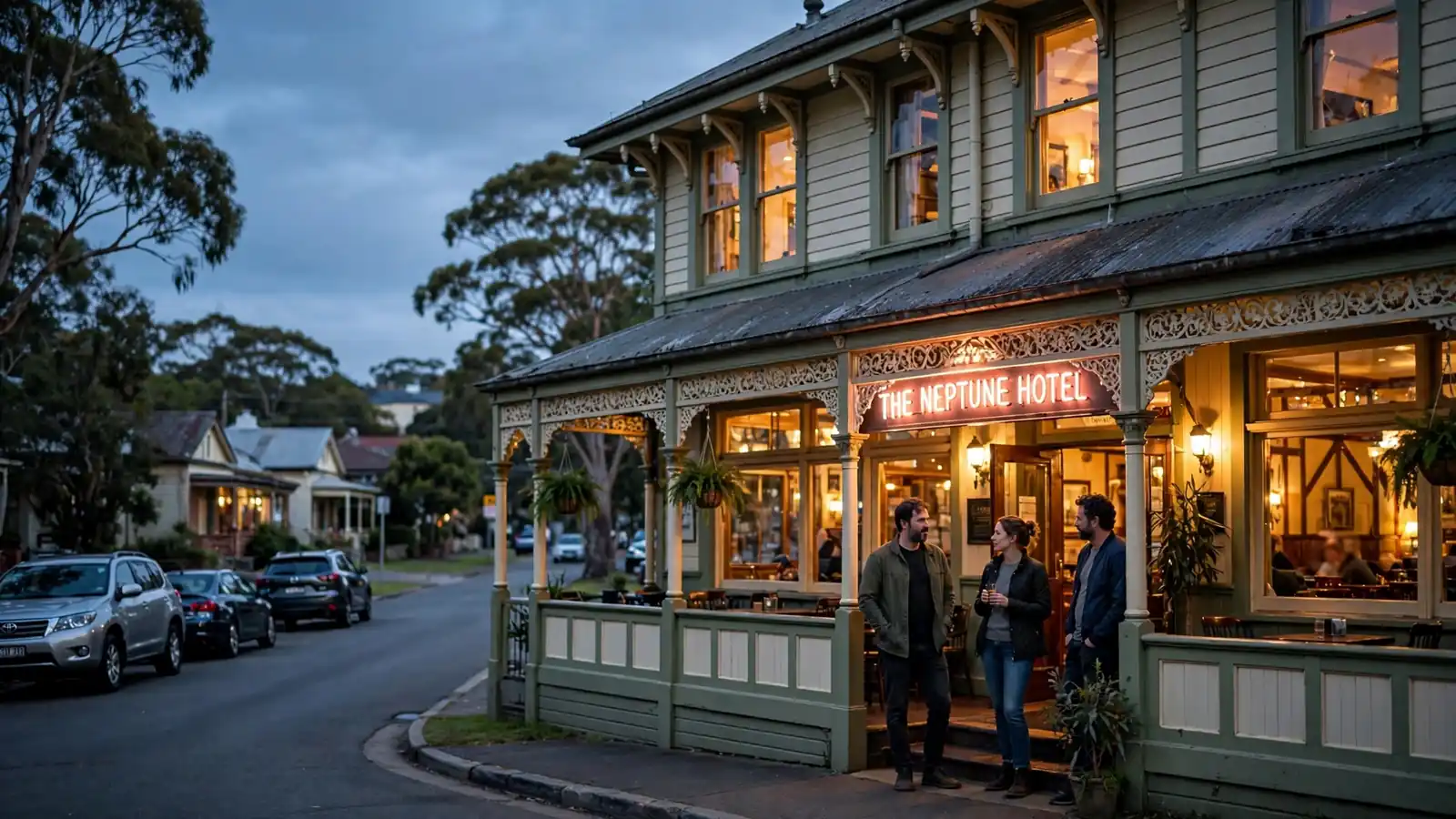
This matters when comparing locations. A venue’s advertised identity, if confirmed, would still not establish the payout conditions for every pokie on its floor. Nor would a general reference to a maximum settle what applies to an individual game. A useful comparison needs the actual terms, not a number detached from its conditions.
For anyone assessing a Canberra venue associated with Crown, the practical threshold is straightforward: confirm the venue itself through a reliable, current listing, then check any machine or payout details directly against information that identifies that location. If those particulars cannot be tied to a specific Canberra venue, they should not be treated as established. That is not a judgement about the brand; it is a limit on what the information supports.
Accordingly, claims about Crown pokies in Canberra, a dedicated Crown room, or a maximum cash payout should be kept distinct from confirmed local venue information. The result is less satisfying than a neat answer, but materially safer than assigning a familiar name and an unsupported payout figure to a place.
CBD Clubs: What the Available Facts Do Not Establish
A club’s location in Canberra’s central business district does not, by itself, establish that the club has pokies. Nor does the general phrase “Canberra clubs” identify a particular venue, its facilities or whether gaming machines are available there. Those are separate details, and a location label cannot substitute for them.
That distinction matters when comparing claims about the “best” pokies in the CBD. A ranking requires identifiable venues and evidence about what each offers. Without those details, naming a club or describing its machines would turn an unconfirmed association into a recommendation. The same applies to claims about a club’s atmosphere, machine selection or suitability: none follows from being in the CBD.
The practical limit is straightforward. A CBD reference can narrow the area someone has in mind, but it cannot confirm that a specific club has pokies. A club name alone would not settle the question either; the relevant facility would need to be confirmed directly with that venue before making a trip or treating it as an option.
Self-exclusion is a separate issue from venue location. Self-exclusion is among the standard responsible-gambling tools, but that general fact does not establish what arrangements any particular Canberra club offers, how they operate, or whether they apply across venues. Those details should not be inferred from a CBD address or from a general description of club gambling.
BetStop has a defined boundary: it applies only to Australian-licensed operators and does not bind offshore sites. It should not be treated as proof of a club’s local self-exclusion process or as a substitute for confirming venue-specific arrangements.
For a decision about CBD pokies, the useful information is therefore concrete and venue-specific: whether the named club has gaming machines and what self-exclusion process it provides. Without confirmation of those points, a CBD label supports a location description, not a claim about available pokies or player protections.

Pokies Searches for Parkes
A request for pokies in Parkes, Canberra, identifies a place to investigate; it does not establish that a venue with gaming machines is located there. Nor does the word “best” resolve that gap. A ranking needs identifiable venues and comparable information about them. Without those details, naming a preferred option would turn a location phrase into a recommendation without a basis.
Parkes should also be treated as a distinct location, not as a substitute for Canberra’s CBD or a general description of the city. Results for Canberra overall may refer to places elsewhere in the territory, while a result associated with Parkes may concern a business or service that is not a pokies venue. The place name alone cannot settle the difference.
For a useful location check, the relevant detail is a confirmed street address linked to the venue itself, together with clear information that gaming machines are available at that address. A map pin, broad area label or business category is not enough on its own. The address needs to match the venue’s own current information; otherwise, a search result can appear geographically precise while leaving the essential point unresolved.
That distinction matters before making travel plans. A result described as “near Parkes” may not be in Parkes, and a Canberra-wide listing does not confirm proximity to the intended destination. Distance should be assessed from an actual address rather than inferred from a heading or summary.
The same standard applies to claims about the best pokies in Canberra. A location-specific phrase cannot establish which games are offered, whether a particular venue has machines, or whether one venue is preferable to another. Those are separate claims, each requiring specific supporting details. In their absence, the sound conclusion is limited: Parkes is the location named in the request, not proof of a local pokies venue or a basis for ranking one.
Cashless Play and the Newcastle Search
Cashless play and a venue’s accepted payment methods are separate matters. PayID is a transfer service linked to Australia’s New Payments Platform (NPP). Payments can be addressed using an email address, mobile number or ABN, and the system has end-to-end encryption. Major Australian banks participate in the NPP. Those features describe a bank-transfer mechanism; they do not establish that a Canberra venue accepts PayID or offers cashless pokies.
The distinction matters because PayID information about online deposits cannot be carried over to a land-based venue. Where real-money online gambling is involved, using PayID requires linking it to a bank account first. That says nothing about a venue’s machines, payment facilities or cashless arrangements. A payment method is not evidence of how a pokie operates, either.
Newcastle is a separate location from Canberra. Combining both place names in one search does not make a venue in one city a Canberra option, nor does it establish a connection between local venues. Geographic relevance and payment arrangements each need their own confirmation; one cannot be inferred from the other.
For practical comparisons, the terms need to be kept distinct: whether a venue has pokies, whether it accepts a particular payment method, and whether play is cashless are different questions. A claim about one does not answer the others. PayID’s role as a bank-transfer service is clear, but it is not a confirmed venue payment method on that basis alone.
Cashless technology can describe a way to access or manage funds, while PayID describes a way to transfer money between accounts. Treating the terms as interchangeable would turn a payment-system description into a claim about a local venue. No such inference is warranted.
Are online pokies legal for Australian players?
Yes, Australians can legally play on offshore sites that accept them, because the law targets operators rather than players. However, no Australian-licensed online casino exists, and players have no legal recourse in Australia if an offshore casino refuses to pay.
Are online pokies rigged?
Each spin is an independent random event determined by a Random Number Generator. A game’s stated RTP describes its return over extensive play, not the outcome of an individual session.
What is the minimum PayID deposit?
Most operators accept minimum deposits of AU$10 to AU$20, while some accept AU$5. PayID is treated like other qualifying deposit methods.
Can casinos change the RTP of their games?
Yes. Some providers let casinos choose between multiple RTP settings for a game, so the same pokie can have different stated returns at different casinos.
Published by the Space9 Casino team.